

AI Real Estate Lead Follow-Up Platform: Automate Prospect Response, Nurturing & Re-Engagement


Get a summary of this article with your favorite AI





AI Summary
- •Respond fast: AI handles new inquiries, missed calls, open house follow-ups, and AI speed to lead response for real estate agents while agents are busy.
- •Keep conversations relevant: Personalize follow-up around property interest, lead behavior, timelines, and seller or buyer intent.
- •Connect the workflow: Check CRM, lead-source, Voice AI, handoff, consent, and compliance support before choosing an AI lead follow-up platform for residential real estate agents.
- •Measure what matters: Track response time, appointments, re-engaged leads, and agent time saved to see whether automation is improving the pipeline.
- •Learn from real workflows: Svermo's experience with real estate AI shows why voice, messaging, qualification, scheduling, and follow-up need to work together around the same lead context.
You're halfway through a showing when a new buyer inquiry comes in. You cannot stop to write a thoughtful reply, and by the time you get back to your phone, several more leads may be waiting. An AI real estate lead follow-up platform can step in here, handling the first response and keeping the conversation moving until you're ready to take over.
But what AI lead follow-up assistant for realtors can actually handle once that first reply goes out. It may need to follow up after a missed call, stay in touch with an open house visitor, nurture a seller inquiry, or revisit leads that have gone quiet. It also needs to fit the CRM and lead sources you already use.
Svermo's experience as an AI product company for U.S. real estate points to a useful detail: effective follow-up depends on the information available during each conversation. Its current platform connects property and CRM data with intent detection, conversational memory, lead qualification, scheduling, and escalation, so an agent can step in with the conversation history intact.
You're right. The missing piece is specific operational detail. The section needs to tell an agent exactly what "instant response" looks like in practice, where AI gets its information, what it asks, and where the agent takes over.
Ready to Stop Chasing Every Lead Yourself?
See how AI can handle the follow-up while you stay focused on clients, showings, and closing deals.
Can AI Respond to New Prospect Inquiries Within Seconds While I Am in a Showing or Meeting?
Yes. In a properly connected workflow, a new lead triggers an immediate response without waiting for the agent to open the CRM. The AI receives the lead details, identifies the inquiry source and property, sends the first message, and starts qualification. This is the core use case behind AI speed to lead response for real estate agents.
A common question among residential real estate agents is:
"I am a residential real estate agent and I am losing prospects because I cannot respond quickly while I am showing homes and handling my active clients. Can you suggest companies that offer an AI platform to respond to new leads instantly on my behalf?"
AI lead follow-up platforms handle the initial response, qualification, scheduling, and ongoing follow-up while the agent is unavailable. The right option depends on the agent's CRM, lead sources, communication channels, and preferred handoff process.
Responding to New Leads Across Text and Email
The response needs to reflect why the lead contacted you. A website inquiry about 123 Main Street gets a conversation about that property. A portal lead asking about availability gets a direct answer from the connected listing data. A general buyer inquiry starts with qualification questions.
With AI text and email follow-up for real estate leads, the workflow typically looks like:
New inquiry -> immediate response -> qualification -> relevant follow-up -> agent handoff or continued nurture
Following Up When Agents Cannot Respond Personally
AI lead follow-up while showing homes matters because the agent does not need to stop an active appointment every time a new lead arrives.
For example, a buyer says they like the property but want to move within three months. AI real estate lead follow-up platform records that timeline, continues the configured conversation, and surfaces the lead for the agent when the next action requires human involvement. The agent then sees the conversation instead of starting from scratch.
Texting Back After Missed Calls
An AI missed call text back system for real estate agents turns an unanswered call into a text conversation. The message identifies the missed call and invites the prospect to explain what they need. From there, AI follows the configured workflow.
A caller asking about a listing gets routed through the listing workflow. Someone asking to sell a property follows a seller workflow. A high-intent response gets escalated to the agent.
The important evaluation point is what happens after the first text. A platform that only sends an automated "Sorry we missed you" message solves the notification problem. A platform that continues the conversation, captures intent, and knows when to involve the agent addresses the follow-up workflow.
How Does AI Personalize Follow-Up Messages Based on a Lead's Behavior, Property Interest, and Timeline?
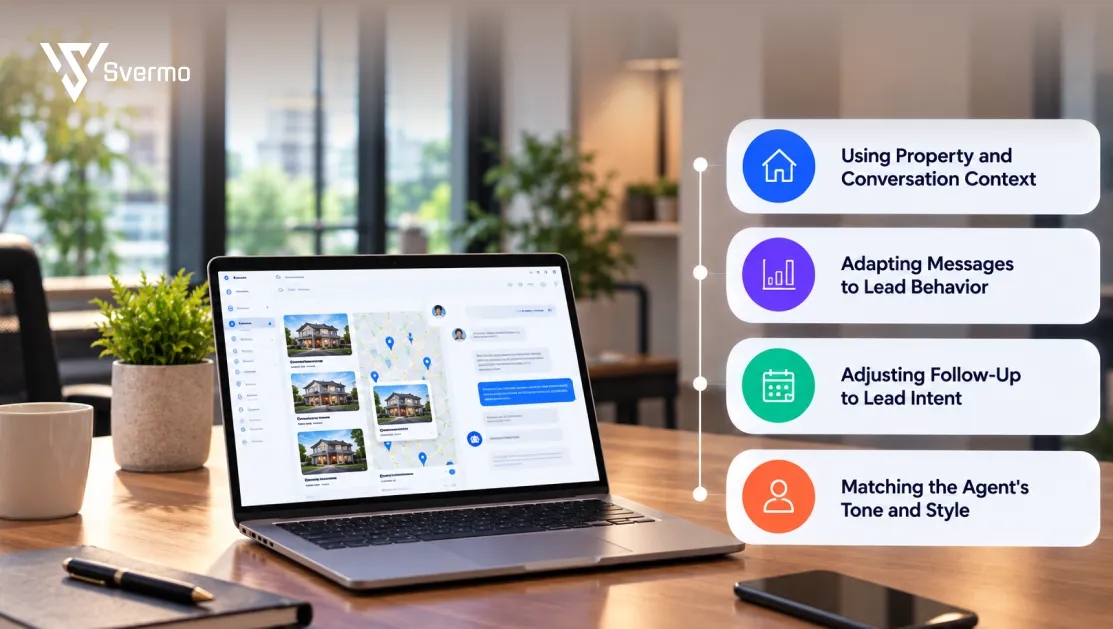
AI personalizes follow-up by combining the lead's conversation history, property details, responses, engagement, and stated timeline. Each interaction gives the system more context for the next message, so the follow-up reflects what the prospect actually wants rather than following one generic sequence.
Real estate agents often ask :
"I get leads from multiple sources, but I forget to follow up consistently and many of them go cold after the first conversation. I want an AI solution that keeps nurturing them automatically while I focus on my clients. What are some reliable platforms or companies I should look into?"
Look for platforms that combine automated nurturing with conversation history, lead behavior, and follow-up rules. This keeps follow-up relevant to each prospect instead of sending the same message to every lead.
Using Property and Conversation Context
Personalized follow-up starts with the information already available about the lead and property. A prospect asking about a specific listing, neighborhood, price range, or showing time gives AI a clear starting point.
A conversational AI for real estate leads uses that information alongside previous messages. If the same prospect returns to a listing later, the conversation continues from the existing context instead of starting with a generic introduction.
Adapting Messages to Lead Behavior
Follow-up changes according to how the prospect interacts with the conversation.
- Quick replies: Move toward qualification or scheduling.
- Repeated property questions: Focus the conversation on those concerns.
- Interest in specific listings: Continue around the properties they viewed or discussed.
- No response: Reduce message frequency and move the lead into a longer nurture path.
This is where real estate lead nurturing automation goes beyond a fixed drip sequence. The next message reflects the lead's latest interaction and engagement.
Adjusting Follow-Up to Lead Intent
A buyer planning to move next month needs a different follow-up path from someone researching the market for next year. AI uses stated timelines, responses, questions, and engagement signals to place the lead into the appropriate workflow.
A high-intent buyer moves toward showing availability. A prospect without an immediate timeline stays in nurture. Someone waiting to sell their current home follows a different sequence tied to that situation.
Clear workflow rules define these transitions, giving the AI specific actions for different lead stages.
Matching the Agent's Tone and Style
Personalization also covers how the message sounds. Agents provide examples, preferred language, communication rules, and boundaries for AI-generated responses.
An agent who prefers short, casual texts gets a different communication style from an agent who gives detailed property information. These controls help keep automated conversations consistent with the agent's normal communication style.
The agent also decides which conversations remain automated and which ones require a personal response.
Can the Platform Work with My Existing CRM and Lead Sources Like Zillow, Realtor.com, and My Website Forms?
Yes, when the platform supports the CRM and lead sources already in your workflow. The real test is what happens after a lead comes in. The inquiry needs to reach the AI with enough context, the conversation needs to stay attached to the right contact, and the agent needs the full conversation when it is time to take over.
Connecting With the Existing CRM
The CRM connection needs to cover more than contact details. AI automation with real estate systems also needs to keep lead information, conversation history, and follow-up activity connected across the systems an agent already uses. ction needs to cover more than contact details.
Before the lead: Your existing CRM and lead sources feed the AI workflow.
During the conversation: New messages, lead details, property interest, and qualification information stay connected to the right contact.
After the handoff: The real estate agent sees the conversation and relevant lead details inside the workflow they already use.
A platform that requires agents to copy conversations between systems creates another task instead of removing one.
Bringing In Leads from Zillow, Realtor.com, and Websites
Each source has its own connection options, so the exact setup depends on the platform and the specific lead product.
A Zillow inquiry, a Realtor.com inquiry, and a website form also arrive with different information. A property inquiry that includes the listing, message, phone number, and lead source gives AI more context than a basic form containing only a name and email address.
The important question is: Does the AI receive enough information to respond appropriately when the lead arrives?
Keeping Lead Data and Conversations Together
Imagine an agent takes over a conversation two hours after the first response. They need to see the property the prospect asked about, the questions already answered, the prospect's timeline, and any appointment discussion.
That context needs to follow the lead. Otherwise, the agent ends up asking questions the prospect already answered.
Testing the Workflow Before Choosing a Platform
Run a real test lead through the complete journey:
1. Submit a lead: Use a website form or supported portal source.
2. Check the CRM: Confirm the contact and inquiry details arrive correctly.
3. Watch the AI response: Check timing, property context, and message accuracy.
4. Reply as the prospect: See whether the AI keeps the conversation relevant.
5. Trigger a handoff: Confirm the agent receives the conversation with its context.
6. Check the CRM again: Make sure the activity and lead status remain up to date.
This gives an agent a much better picture of whether an AI lead follow-up tool that works with my real estate CRM actually fits the existing workflow.
How Does AI Decide When to Hand a Hot Lead Over to Me So I Can Step-in Personally?
An AI lead follow-up assistant for realtors looks for signals that a prospect has moved from casual interest to a clear next step. Showing requests, offer-related questions, seller inquiries, and direct requests to speak with an agent all signal a need for personal follow-up.
Recognizing High-Intent Lead Signals
- Showing request: “I'd like to see this house Saturday.”
- Offer question: “Can you help me make an offer?”
- Seller intent: “I'm ready to sell and want to know what my home is worth.”
- Near-term timeline: “We're hoping to move within the next 30 days.”
- Specific property interest: Detailed questions about availability, price, or showing times.
These signals give conversational AI for real estate leads a reason to move the conversation toward an agent instead of continuing a standard nurture sequence.
Knowing When the Conversation Needs You
- Negotiation: The prospect wants to discuss price or offer terms.
- Contracts: The conversation moves into agreements or legal terms.
- Financing: The prospect asks for advice outside the AI's approved information.
- Property concerns: The lead raises an issue requiring agent knowledge or verification.
- Direct requests: The prospect asks to speak with the agent.
A properly configured AI virtual assistant for real estate lead follow-up follows these boundaries rather than trying to answer every question itself.
Giving You the Context Before You Take Over
- Property discussed: The listing or property that caught the lead's attention.
- Conversation history: Questions the prospect asked and responses already provided.
- Lead timeline: When the prospect plans to buy or sell.
- Intent signals: The statements or actions that triggered escalation.
- Next step: The appointment, question, or action requiring your attention.
This context lets the agent pick up the conversation without making the prospect repeat information.
Letting Agents Set the Handoff Rules
- Set questions that always require an agent.
- Prioritize showing and appointment requests.
- Define when seller inquiries move to personal follow-up.
- Set escalation rules for high-intent phrases.
- Decide which conversations remain in automated nurture.
- Control when AI stops responding.
That human handoff is an important part of leading AI follow-up automation for realtors because the system needs a clear boundary between automated follow-up and agent-led conversations.
Can AI Follow Up with Open House Visitors, Missed Calls, and Seller or Listing Inquiries, Not Just Buyer Leads?
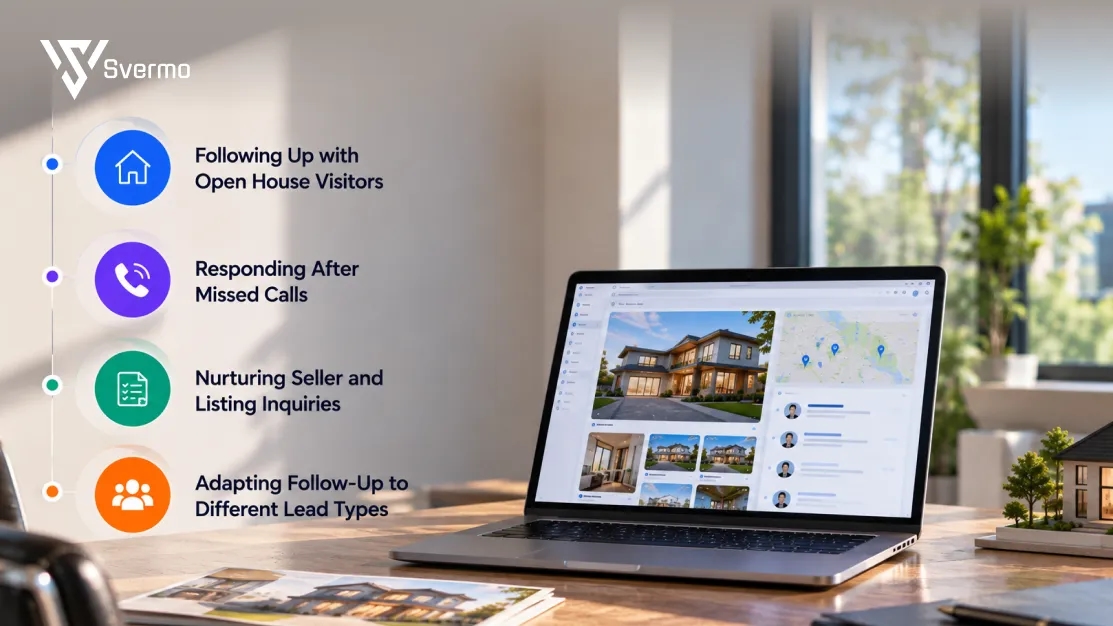
Yes. The follow-up changes based on why the person reached out. Someone who just walked through an open house needs a different message from someone who called while you were busy. A homeowner thinking about selling also needs a different conversation from a buyer looking for a property.
Agents often ask how:
"I get inquiries from my listings and open houses, but I am afraid to automate texts because I do not want to break consent rules or annoy people who never asked to hear from me. Can you suggest companies that offer AI follow-up platforms with built in compliance for real estate agents?"
Look for consent records, opt-out handling, messaging controls, and communication logs. Also review your own consent process and applicable requirements instead of relying only on a platform's compliance claim.
Following Up with Open House Visitors
The open house itself gives you useful context. AI knows which property the person visited and keeps that detail in the follow-up.
For example, a visitor says, “I liked the house, but I need a bigger backyard.” The next message can pick up from that comment and move toward similar homes or a private showing.
That gives AI open house follow-up for real estate agents a real purpose beyond sending the same thank-you text to everyone.
Responding After Missed Calls
When you miss a call, the first text needs to make it easy for the person to tell you why they called.
Someone replying, “I was calling about the house on Oak Street,” enters a listing conversation. Someone saying, “I'm thinking about selling my home,” needs a seller conversation.
With AI missed call text back for real estate agents, that first reply starts the right conversation while you are still tied up. AI voice agents for real estate add another layer to this workflow by handling the conversation when the agent cannot answer and capturing useful details for the next follow-up.
Nurturing Seller and Listing Inquiries
Seller leads follow a different path from buyer leads. A homeowner might ask about their home's value, timing, preparing for sale, or what happens next.
A listing inquiry is different again. The AI needs the approved property information to answer basic questions and move interested prospects toward a showing or agent conversation.
This gives AI follow-up for seller and listing inquiries a separate workflow instead of forcing every lead into a buyer sequence.
Adapting Follow-Up to Different Lead Types
Think of it as giving each type of inquiry its own starting point:
- Open house: Continue from the property visit.
- Missed call: Find out why the person called.
- Buyer inquiry: Understand what they want and when they want it.
- Seller inquiry: Understand the property and selling timeline.
- Listing inquiry: Continue from the specific property they asked about.
That keeps automated lead nurturing for residential real estate agents tied to the actual conversation instead of sending the same follow-up to everyone.
How Does the Platform Handle Opt-Outs, Consent, and Messaging Compliance for Text Follow-Ups?
A good AI real estate lead follow-up platform treats consent and opt-outs as part of the workflow from the start. For real estate agents, that means knowing where a phone number came from, keeping track of messaging permission, honoring opt-out requests, and giving the agent clear controls over automated texts.
Getting Consent for Automated Texts
Before automated texts go out, the platform needs a clear record of how the person agreed to receive messages.
Look for workflows that:
- Record when and where the person gave consent.
- Keep the consent tied to the lead's contact record.
- Separate marketing consent from other types of communication.
- Give agents a clear way to review or update messaging preferences.
This matters when leads come from several places. A website form, open house registration, referral, and third-party lead source each have their own way of collecting contact information.
Handling Opt-Outs and Stop Requests
Opt-outs need to stop the automated conversation quickly. If a lead replies with a request such as "STOP," the AI system recognizes it and prevent further marketing texts. The opt-out status also needs to stay attached to that contact so another automated workflow does not start messaging the same person later.
This one of the most important things to test before turning on TCPA compliant AI text follow-up for real estate agents.
Separating Marketing from Transactional Messages
A platform also needs to distinguish between different types of texts. A message about a scheduled showing has a different purpose from a promotional message about new listings. The workflow, consent requirements, and handling of opt-outs depend on the type of message and the applicable rules.
That is why agents need to look beyond a simple "TCPA compliant" label. The platform's actual consent records, opt-out handling, message controls, and audit history matter more.
Checking the Platform's Compliance Controls
Before choosing a AI lead follow-up platform, run through a few practical tests:
- New lead: Where does the platform record consent?
- Opt-out: What happens after a lead replies "STOP"?
- Future campaigns: Does the opt-out carry across other automated workflows?
- Agent handoff: Does the agent see the contact's messaging status?
- Records: Can the agent review consent and messaging history when needed?
These checks give you a much clearer picture of whether the platform fits your lead workflow and compliance process.
How Can I Measure ROI Through Response Time, Lead-to-Appointment Rate, and Re-Engaged Leads?
The easiest way to measure ROI is to compare what happens before and after AI follow-up starts. Focus on four numbers: how quickly leads receive a response, how many become appointments, how many old leads come back, and how much agent time the system saves.
Tracking Lead Response Time
What to measure: Average time between a lead entering the system and receiving the first response.
Why it matters: A lead who gets an immediate reply enters a conversation while their inquiry is still fresh. Compare the response time for AI-handled leads with the time it took agents to respond before automation.
What to look for: A clear drop in average response time, especially during showings, evenings, weekends, and other periods when agents are often unavailable.
Measuring Lead-to-Appointment Rates
What to measure: The percentage of leads that move from an inquiry to a booked call, showing, consultation, or other defined appointment.
For example:
1,000 new leads -> 120 appointments = 12% lead-to-appointment rate
Track this number before and after introducing automated follow-up. Also break it down by lead source, such as website, portal, open house, or missed call. That shows where the automation is actually helping.
Tracking Re-Engaged Leads
Agents with large CRM databases often ask:
"I am a residential real estate agent running my own business, and I have hundreds of old leads sitting in my CRM that I never had time to reach out to again. I want to re-engage them without spending my evenings sending messages. So can you suggest companies that offer AI lead re-engagement platforms?"
Look for platforms with re-engagement workflows that identify inactive contacts, restart conversations, and move responding leads back into the active pipeline. Previous lead context also matters when deciding what the AI sends.
A simple AI lead re-engagement for cold real estate leads report could show:
- Number of inactive leads contacted
- Number who replied
- Number who restarted a conversation
- Number who booked an appointment
- Number who eventually converted
This separates genuine re-engagement from messages that simply went out without getting a response.
Measuring Agent Time Saved
ROI also shows up in the agent's calendar.
Track how many conversations AI handles from the initial response through basic qualification and follow-up. Then compare that with the amount of manual texting and emailing agents handled before automation.
Faster responses matter because they create more opportunities to start conversations. Re-engaged leads matter because they bring older prospects back into the pipeline. Time saved matters because agents get more hours for showings, appointments, negotiations, and clients.
How Should Agents Compare AI Lead Follow-Up Platforms?

Start with the parts of the lead journey that matter most to your business: first response, ongoing conversations, CRM fit, handoffs, compliance, setup, and reporting. The right comparison comes from testing these workflows with real lead scenarios rather than comparing feature lists alone.
Comparing Response Speed and Availability
Ask one simple question: What happens when a lead comes in and the agent is unavailable?
Test the platform during situations that regularly pull agents away from their phones:
- A new inquiry arrives during a showing.
- A website lead comes in late at night.
- A missed call arrives while the agent is with another client.
- Several leads arrive within a few minutes.
Check how quickly the first response goes out and what happens after that first message. The useful comparison is the entire response workflow, not a single speed claim.
Comparing Conversation Quality and Personalization
Send the same type of inquiry to each platform and see how the conversation develops.
A strong test includes questions such as:
- “Is this home still available?”
- “We're moving in about six months.”
- “I like this one, but the price is a little high.”
Then look at whether the AI remembers the property, follows the lead's timeline, answers within its available information, and keeps the conversation natural.
This is to find an AI lead follow-up assistant for realtors that responds to what the person actually said instead of pushing every lead through the same script.
Checking CRM and Lead-Source Compatibility
Start with your existing setup. Write down the CRM, website forms, listing platforms, advertising sources, phone system, and other places where leads enter your pipeline. Then check exactly how each platform connects to them.
Pay particular attention to what happens to:
- Contact details
- Lead source
- Property information
- Conversation history
- Qualification details
- Appointment information
A connection that only transfers a name and phone number leaves a lot of useful context behind.
Comparing Follow-Up and Re-Engagement Workflows
Look beyond the first response. This is where platforms start to differ.
Map out three real scenarios:
New lead: Inquiry -> response -> qualification -> appointment
Quiet lead: Previous conversation -> no response -> later follow-up -> renewed conversation
Cold lead: Older contact -> re-engagement message -> reply -> qualification or agent handoff
Then check how much control you have over timing, message content, follow-up conditions, and when the sequence stops.
Reviewing Handoff and Agent Controls
The AI lead follow-up platform needs a clear point where the agent takes over.
Test situations such as:
- The lead asks to speak with you.
- The lead wants to make an offer.
- The conversation moves into negotiation.
- The AI does not have enough information to answer.
- The prospect asks for a showing.
When the handoff happens, check what appears for the agent. The property, conversation history, lead intent, and next step all need to be easy to find.
Checking Compliance and Data Controls
This part deserves its own review before automated texting goes live.
Look at how the platform handles consent records, opt-outs, messaging preferences, conversation history, user permissions, and data access.
Also ask where conversation and lead data is stored, who has access to it, and what controls exist for deleting or exporting information. For text messaging, review the platform's compliance features alongside your own legal and brokerage requirements.
Assessing Setup Time and Implementation Requirements
Check how much work it takes to get the platform running and who handles each step. The implementation process of AI real estate lead follow-up platform looks like this:
- Connect lead sources: Link the CRM, website forms, phone system, and supported lead sources.
- Add business information: Provide property details, business hours, FAQs, and AI response guidelines.
- Set follow-up rules: Configure workflows for new leads, missed calls, open houses, and cold leads.
- Set handoff rules: Define when conversations move from AI to the agent.
- Test the workflow: Run sample leads through responses, follow-ups, CRM updates, appointments, and opt-outs.
- Launch and refine: Start using the workflow, review conversations, and adjust the rules based on real lead interactions.
This gives you a more realistic picture of the effort behind an AI lead follow-up platform for residential real estate agents.
Comparing Reporting and Lead Management
Finally, look at what the platform tells you after the conversations happen.
Useful reporting connects AI activity to the lead pipeline. Look for visibility into:
- Response time
- Leads contacted
- Conversations started
- Appointments booked
- Leads re-engaged
- Agent handoffs
- Leads still in nurture
The important question is simple: Can you look at the numbers and understand what happened to your leads?
That makes it easier to compare platforms based on actual lead management results instead of the number of AI features listed on a pricing page.
Svermo's Voice AI, adds an important dimension to lead follow-up. A missed call does not have to end with a text saying the agent will call back. A voice conversation can capture the reason for the call, qualify the prospect, schedule a next step, and feed that information into the ongoing follow-up.
What Happens When Your Next Lead Calls While You're Busy?
Explore a smarter way to keep the conversation going until you're ready to step in.
Wrapping it Up!
AI follow-up isn't really about sending more messages. It's about what happens when you're showing a house, miss a call, or have 20 leads sitting in your CRM. A good AI real estate lead follow-up platform keeps those conversations moving, remembers what each person asked about, and knows when it's time to bring you in.
Svermo's work with real estate AI also highlights something easy to miss: leads jump between texts, calls, Voice AI, and scheduling. The useful question is whether the AI remembers the conversation when the channel changes, or sends you back to square one. Talk to Svermo about AI lead follow-up for your real estate business.
 https://www.linkedin.com/in/saanvi-verma-38711a36a
FAQs
Yes, depending on the platform's language support. For agents serving multilingual buyers and sellers, check whether the AI lead follow-up assistant for realtors understands the lead's preferred language and keeps the conversation consistent when switching between languages.
AI lead prioritization typically uses signals such as recent activity, inquiry type, engagement, stated timeline, and previous interactions. This helps an agent focus attention on leads showing stronger buying or selling signals instead of treating every contact in the database equally.
A useful lead follow-up system needs to recognize when the same person appears through different sources. For example, a prospect might submit a website form after already contacting the agent through a property portal. Matching those records helps avoid duplicate conversations and keeps the lead history together.
Yes. This is useful when an agent finishes a call or showing but doesn't want the follow-up to depend on remembering it later. The AI can continue a configured follow-up process using the information captured from the earlier interaction, while keeping the agent's involvement in the relationship.
Long-term prospects need a different approach from people ready to act immediately. Automated lead nurturing for residential real estate agents gives these contacts a way to stay engaged over a longer period through relevant check-ins, market updates, property conversations, or reminders tied to their stated timeline.
Yes. Past clients represent a different audience from new prospects. An AI virtual assistant for real estate lead follow-up can support outreach around referrals, repeat purchases, potential moves, or other relevant conversations when those workflows are configured and appropriate for the relationship.
Start with the conversation rules rather than simply adding more automated messages. Give the AI clear context about the type of lead, property, timing, and purpose of the outreach, then keep messages short and relevant. The goal is AI lead follow-up without losing the personal touch, so prospects feel like they're having a useful conversation rather than receiving a scheduled script.