

AI Leasing Automation for Property Management: Features, Benefits, Use Cases, Challenges, and Best Practices

Get a summary of this article with your favorite AI





AI Summary
- •AI leasing automation for property management automates the lead-to-lease lifecycle, reducing manual work and improving leasing efficiency.
- •AI-powered leasing workflows improve response times, occupancy, conversions, and overall operational performance.
- •Choose a platform with AI leasing workflow automation, PMS and CRM integrations, conversational AI, analytics, and enterprise security.
- •Maximize results with standardized workflows, clean data, connected systems, and measurable KPIs.
- •Svermo's leasing AI agent combines automation, AI, and enterprise integrations to help property management companies scale leasing operations efficiently.
How will your leasing team keep up as U.S. households that rent are projected to grow from 46.2 million to 56.3 million by 2035 without increasing manual workloads?
Because most leasing teams still rely on manual processes that slow down responses, create inconsistent follow-ups, and make it difficult to manage growing property portfolios. AI leasing automation for property management addresses these challenges by automating repetitive leasing tasks, streamlining workflows, and helping teams move prospects through the leasing lifecycle faster.
According to McKinsey, organizations implementing AI-powered leasing workflows have improved lease renewal rates by 3% to 7%, demonstrating how intelligent automation can strengthen resident retention while improving operational efficiency.
But what does AI leasing automation actually automate across the leasing lifecycle? Which leasing workflows deliver the greatest operational impact? And what should property management companies look for in an AI leasing automation platform to achieve measurable business outcomes?
At Svermo, we work closely with property management companies, multifamily operators, and real estate technology leaders to understand how leasing teams evaluate, adopt, and scale AI across their operations. Those practical insights shape this guide with implementation-focused recommendations.
For many organizations, leasing automation is part of AI property management that connects leasing, resident communication, and operational workflows within a single platform.
The opportunity is to rethink how the entire lead-to-lease journey operates. That starts with understanding what AI leasing automation really is and the role it plays in modern property management.
Ready to Modernize Your Leasing Operations?
See how AI leasing automation for property management fits into your existing workflows without disrupting your team.
What Is AI Leasing Automation for Property Management and How Does It Work?
AI leasing automation for property management is the use of artificial intelligence to automate, coordinate, and optimize leasing activities across the entire lead-to-lease lifecycle. Instead of relying on disconnected tools or manual follow-ups, an AI leasing automation platform continuously analyzes prospect interactions, executes predefined workflows, and assists leasing teams.
Unlike traditional automation that follows fixed rules, AI leasing workflow automation for property management adapts to prospect behavior, prioritizes tasks, personalizes communication, and keeps leasing processes moving with minimal manual intervention.
In practical terms, property leasing automation with AI helps property management companies:
- Respond to prospect inquiries across multiple communication channels, 24/7.
- Qualify leads using predefined leasing criteria and prospect intent.
- Schedule property tours without manual coordination.
- Automate application collection and document verification workflows.
- Coordinate lease preparation and approval processes.
- Send timely follow-ups to reduce lead drop-offs throughout the leasing journey.
- Centralize leasing activities across multiple properties through a single workflow.
- Generate operational insights that help leasing managers improve conversion rates and team performance.
But do you know, how does AI automate the lead-to-lease lifecycle?
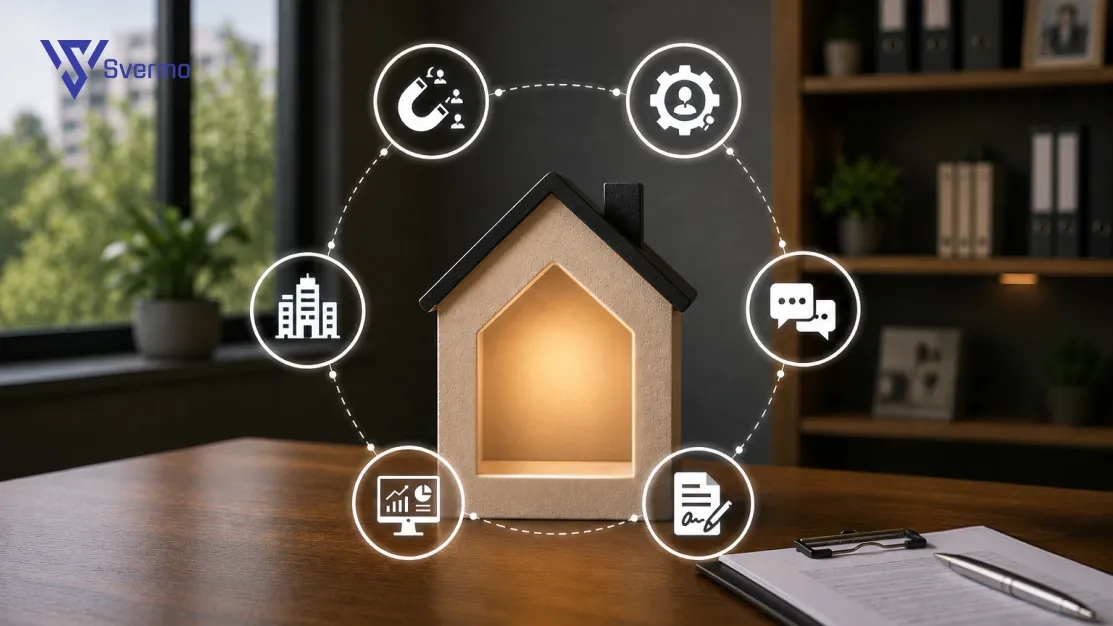
Rather than automating isolated tasks, AI-driven property leasing workflows connect every stage of the leasing lifecycle into a continuous process.
Each workflow shares information with the next, reducing delays, eliminating repetitive work, and ensuring prospects receive timely engagement from their first inquiry through lease signing.
1. Lead Capture and Qualification
The process begins as soon as a prospect submits an inquiry through your website, listing portals, paid campaigns, or referral channels. Instead of manually reviewing every lead, AI gathers relevant information and determines whether the prospect meets your leasing criteria.
Key activities include:
- Capturing inquiries from multiple lead sources.
- Organizing prospects into a centralized leasing pipeline.
- Collecting qualification details such as budget, move-in timeline, and property preferences.
- Prioritizing high-intent prospects for faster engagement.
2. Prospect Communication and Engagement
Once a lead is qualified, AI-powered leasing workflows maintain consistent communication across multiple channels. This helps reduce response times while ensuring prospects receive accurate information whenever they need it.
The workflow can:
- Answer common leasing questions in real time.
- Personalize conversations based on prospect information.
- Send reminders, updates, and follow-ups automatically.
- Escalate complex conversations to leasing staff when needed.
3. Tour Scheduling and Coordination
Scheduling tours often involves multiple emails, phone calls, and calendar updates. AI automation for property leasing streamlines this process by coordinating availability between prospects, leasing teams, and properties.
Typical tasks include:
- Checking calendar availability automatically.
- Scheduling in-person or virtual property tours.
- Sending confirmations and reminders.
- Managing cancellations and rescheduling requests.
4. Application Processing and Lease Coordination
After a prospect decides to move forward, leasing AI combined with the AI document management system keeps the application and leasing process organized by routing information, tracking progress, and coordinating required actions across teams.
This stage includes:
- Collecting applications and supporting documents.
- Routing information for verification and approvals.
- Monitoring application status throughout the process.
- Coordinating digital lease preparation and execution.
5. Follow-Ups and Resident Onboarding
The leasing journey doesn't end with a signed lease. AI continues supporting the transition by automating onboarding communications and ensuring important tasks aren't overlooked.
Common workflows include:
- Sending personalized follow-up messages.
- Sharing move-in instructions and important documents.
- Delivering reminders for upcoming milestones.
- Keeping new residents informed throughout onboarding.
6. Performance Monitoring and Workflow Optimization
Every interaction generates valuable operational data. Instead of relying on manual reports, AI leasing workflow automation continuously tracks leasing performance and identifies opportunities to improve efficiency.
Property management teams can monitor:
- Lead response times.
- Lead-to-tour and tour-to-lease conversion rates.
- Application turnaround times.
- Occupancy and vacancy trends.
- Team productivity and workflow performance.
This connected approach is what makes end-to-end AI leasing automation for modern property operations different from traditional workflow automation. Instead of optimizing individual tasks, it orchestrates the complete leasing journey, helping property management companies improve efficiency, consistency, and leasing outcomes across every property
Many property management companies already use digital leasing tools, yet manual processes still slow down operations. So, how does AI leasing automation actually differ from a traditional leasing workflow?
Traditional Leasing Workflows vs AI Leasing Automation: What's the Difference?
Many property management companies already use digital tools, but digitization isn't the same as automation. Traditional leasing workflows vs AI leasing automation differs in how leasing activities are executed, coordinated, and optimized across the entire lead-to-lease lifecycle.
| Leasing Process | Traditional Leasing Workflow | AI Leasing Automation |
|---|---|---|
Prospect Response | Leasing teams manually respond to inquiries during business hours, often leading to delayed responses and missed opportunities. | AI engages prospects instantly across chat, SMS, email, and voice, ensuring every inquiry receives a timely response. |
Lead Qualification | Agents qualify prospects through multiple conversations, collecting the same information repeatedly. | AI automatically qualifies prospects using predefined leasing criteria and routes high-intent leads to leasing teams. |
Tour Scheduling | Staff coordinate tours through emails, phone calls, and calendar updates, increasing administrative effort. | AI identifies available time slots, schedules tours, sends reminders, and updates calendars automatically. |
Application Processing | Leasing teams manually collect documents, verify information, and track application status across multiple systems. | Property leasing process automation with AI keeps applications moving by collecting documents, triggering approvals, and notifying applicants at each stage. |
Prospect Follow-Ups | Follow-ups depend on staff availability, making communication inconsistent across prospects. | AI automation for leasing operations and tenant communication sends timely, personalized follow-ups based on each prospect's activity and leasing stage. |
Workflow Visibility | Leasing managers rely on spreadsheets or multiple applications to monitor progress and identify bottlenecks. | Centralized dashboards provide real-time visibility into AI-driven property leasing workflows, conversion metrics, occupancy trends, and team performance. |
Portfolio Scalability | Supporting additional properties typically requires hiring more leasing staff to manage growing workloads. | AI leasing automation for multifamily and residential property portfolios enables standardized workflows that scale across communities without proportionally increasing administrative effort. |
The difference is creating a connected leasing operation where data, workflows, and communication move seamlessly across every stage of the resident journey.
Once you understand how AI transforms traditional leasing processes, the next question is straightforward: what measurable business outcomes can property management companies expect after implementing it?
How Does AI Leasing Automation Improve Property Management Operations?
The value of AI leasing automation for property management is measured by how effectively it helps your teams lease properties faster, improve occupancy, and scale operations without increasing administrative overhead.
Here are the key benefits of AI leasing automation for property management companies:
1. Accelerates Leasing Velocity
Every delay between an inquiry and a signed lease creates an opportunity for prospects to look elsewhere. AI automation for property leasing keeps the leasing process moving by minimizing bottlenecks, shortening response times, and reducing delays throughout the lead-to-lease journey.
2. Scales Leasing Operations
Growing property portfolios often require additional operational capacity. AI leasing workflow automation enables leasing teams to manage higher inquiry volumes and leasing activity without expanding headcount at the same pace, making growth more sustainable.
3. Prevents Revenue Loss
Missed inquiries, inconsistent follow-ups, and delayed application reviews can directly impact occupancy. Property leasing automation with AI helps reduce lead leakage by ensuring every qualified prospect receives timely engagement throughout the leasing process.
4. Standardizes Leasing Operations
Managing multiple communities often leads to inconsistent processes and resident experiences. AI helps standardize communication, approvals, and leasing workflows, giving regional teams greater operational consistency while maintaining service quality across the portfolio.
5. Real-Time Leasing Insights
Every leasing interaction generates valuable operational data. AI consolidates this information into meaningful performance insights, helping managers identify conversion bottlenecks, monitor leasing trends, and make faster, data-driven decisions.
6. Enables Sustainable Portfolio Growth
As portfolios expand, operational complexity grows with them. AI leasing automation for multifamily and residential property portfolios provides the foundation for scaling leasing operations efficiently while maintaining consistent performance, compliance, and resident experiences across every community.
The greatest value of AI leasing automation for property management comes from creating a faster, more consistent, and scalable leasing operation that supports both business growth and better resident experiences. But where do these benefits of AI leasing automation make an impact?
How Is AI Leasing Automation Being Used Across Modern Property Management Operations?

The value of AI property leasing automation use cases for property managers lies in solving specific operational challenges across the leasing lifecycle. Rather than replacing leasing teams, AI automates repetitive, time-sensitive workflows that often slow down leasing operations and impact occupancy.
Here are the most impactful use cases for AI-driven lease workflow automation for multifamily properties.
1. Responding to Prospect Inquiries Instantly
An AI lead-to-lease automation platform with voice AI can answer common leasing questions, share property information, verify availability, and continue conversations through chat, SMS, email, or voice without waiting for a leasing agent.
Example: A multifamily property manager receives inquiries throughout the evening when the leasing office is closed. Instead of waiting until the next business day, AI responds immediately, answers common leasing questions, shares available units, and schedules tours, preventing high-intent prospects from moving to competing properties.
2. Qualifying High-Intent Prospects
Through property leasing process automation with AI, prospects are automatically qualified based on leasing criteria such as move-in dates, budget, occupancy requirements, pet policies, and preferred locations before being routed to leasing teams.
Example: A property management company managing multiple residential communities uses AI to qualify prospects based on budget, move-in timeline, occupancy requirements, and pet policies before assigning them to leasing agents. This reduces time spent on unqualified inquiries and allows leasing teams to focus on prospects most likely to lease.
3. Automating Tour Scheduling
Coordinating tours manually often involves multiple emails, phone calls, and calendar adjustments.
AI automatically identifies available time slots, schedules tours, sends confirmations, issues reminders, and updates calendars in real time. This reduces administrative work while making scheduling easier for prospective residents.
Example: During peak leasing season, AI automatically schedules self-guided and agent-led tours based on calendar availability, sends reminders, and reschedules appointments when necessary. Leasing teams no longer spend hours coordinating calendars manually.
4. Streamlining Application and Lease Processing
AI leasing workflow automation for property management with the help of tenant AI keeps applications moving by collecting required documents, notifying applicants about missing information, routing approvals, and tracking every stage of the leasing process.
Example: When a prospect submits an application, AI verifies document completeness, requests missing information, routes applications for approval, and tracks progress automatically. Applicants receive updates at every stage without needing to contact the leasing office.
5. Keeping Prospects Engaged Until Lease Signing
AI automatically sends personalized follow-ups, answers additional questions, shares next steps, and reminds prospects about pending applications or lease documents. This continuous engagement helps reduce abandoned applications and improves lead-to-lease conversion.
Example: After completing a property tour, prospects often need time to compare options. AI maintains engagement by sending personalized follow-ups, answering additional questions, and reminding prospects about incomplete applications, reducing drop-offs during the leasing process.
This is among the most common use cases of conversational AI agents in modern property management in USA.
6. Standardizing Leasing Operations Across Multiple Communities
An AI platform for automating property leasing workflows and resident journeys standardizes leasing workflows, communication templates, approval processes, and operational reporting while allowing property-specific configurations where needed.
Example: A regional property management company operating dozens of communities uses AI to standardize prospect communication, qualification criteria, reporting, and approval workflows across every location. This creates a consistent leasing experience regardless of which community a prospect contacts.
These use cases demonstrate that successful AI leasing automation for multifamily and residential property portfolios is about improving specific operational workflows rather than automating everything at once.
Organizations typically achieve the best results by identifying high-impact leasing processes and expanding automation as operational maturity grows.
But which capabilities actually separate a modern AI leasing automation platform from basic workflow tools, and which features should you prioritize when evaluating a solution?
Want to Automate These Leasing Workflows?
Discover how AI can simplify your day-to-day leasing operations across every property.
What Features Should Property Managers Look for in an AI Leasing Automation Platform?
The right AI automation platform for rental leasing operations should provide the core features needed to automate leasing workflows, integrate with your existing technology stack, and support long-term operational growth.
The following features are essential for end-to-end AI leasing automation for modern property operations. It answers the frequently asked question by businesses "What features are essential in an AI leasing automation platform?"
| Must-Have Feature | Description | Why It Matters |
|---|---|---|
Omnichannel Lead Capture | Captures leasing inquiries from websites, ILS platforms, social media, email, SMS, and phone into a centralized pipeline. | Prevents missed opportunities by ensuring every prospect enters a single leasing workflow. This creates a stronger foundation for lead-to-lease automation and improves response consistency across every communication channel. |
AI Lead Qualification | Qualifies prospects using configurable criteria such as budget, move-in timeline, occupancy requirements, and property preferences. | Helps leasing teams prioritize high-intent prospects instead of manually screening every inquiry. This improves conversion efficiency and enables property leasing automation with AI to focus resources where they create the most value. |
Conversational AI | Engages prospects through chat, SMS, email, and voice while answering leasing questions and collecting required information. | Delivers instant, consistent communication around the clock, reducing response delays while improving the overall prospect experience through AI-powered leasing workflows. |
Self-Service Tour Scheduling | Allows prospects to book available tours while automatically synchronizing with leasing calendars. | Eliminates scheduling bottlenecks, reduces administrative coordination, and gives prospects the flexibility to schedule tours whenever they're ready, helping accelerate leasing decisions. |
Application Workflow Management | Automates application intake, document collection, status tracking, and approval routing. | Shortens application turnaround times by reducing manual handoffs, allowing AI leasing workflow automation for property management to move qualified applicants through the leasing process more efficiently. |
Lease Document Automation | Generates lease documents, manages document versions, and integrates with e-signature solutions. | Improves document accuracy, minimizes administrative errors, and speeds up lease execution while maintaining a consistent documentation process across properties. |
Workflow Automation Engine | Automates leasing tasks using configurable workflows, approval rules, triggers, and notifications across systems. | Forms the foundation of AI leasing workflow automation for property management, ensuring every leasing activity progresses automatically while reducing operational bottlenecks and manual intervention. |
Property Management System (PMS) Integration | Synchronizes prospect, leasing, and resident data with existing property management software. | Creates a single source of truth across leasing operations, eliminates duplicate data entry, and enables AI automation for leasing operations and tenant communication to function without disrupting existing workflows. |
CRM & Communication Integrations | Connects leasing workflows with CRM platforms, email, SMS, VoIP, and collaboration tools. | Keeps every prospect interaction connected across systems, improving team collaboration while delivering a seamless communication experience throughout the leasing lifecycle. |
Leasing Analytics Dashboard | Tracks response times, lead-to-lease conversion, occupancy trends, leasing velocity, and team performance. | Gives leasing managers real-time visibility into operational performance, making it easier to identify bottlenecks, optimize workflows, and measure the business impact of AI leasing automation for property management. |
Compliance & Audit Management | Records workflow actions, approvals, communication history, and user activity while supporting compliance requirements. | Strengthens governance by maintaining complete activity records, reducing compliance risks, and ensuring leasing processes remain standardized across every property and team. |
Enterprise Security Controls | Protects leasing and resident data through role-based access, encryption, Single Sign-On (SSO), Multi-Factor Authentication (MFA), and audit logs. | Protects sensitive resident and leasing information while helping organizations meet enterprise security, privacy, and regulatory requirements as they scale their AI automation platform for rental leasing operations. |
A platform may offer impressive AI capabilities, but without these foundational features, it will struggle to automate leasing operations at scale.
Having the right features is only one part of the equation. The next question is where these capabilities create the greatest impact across day-to-day leasing operations and how property management companies are applying them in real-world scenarios.
How Does AI Leasing Automation Integrate with Property Management Systems and CRM Platforms?
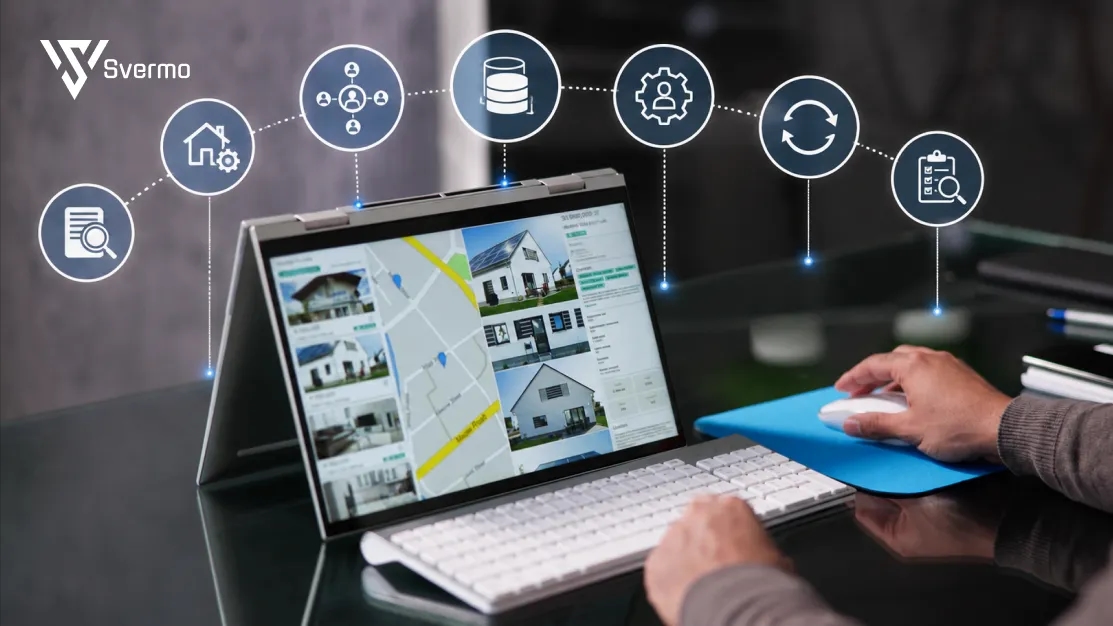
The success of AI leasing automation for property management depends on how well it integrates with your existing technology ecosystem.
Rather than replacing your current systems, a modern AI automation platform for rental leasing operations connects with the application your teams already use, allowing information to flow securely and automatically throughout the leasing lifecycle.
A successful integration is less about connecting applications and more about creating a unified operational workflow where every system shares accurate, real-time information.
1. Assess Current Systems
Before implementing AI leasing workflow automation for property management, evaluate your existing technology stack to identify the systems involved in leasing operations. Understanding how data currently moves between applications helps eliminate duplicate processes and integration gaps before deployment begins.
Start by identifying:
- The property management system (PMS) used across your portfolio.
- CRM and lead management platforms currently in place.
- Communication tools such as email, SMS, chat, and voice.
- Existing manual workflows that create operational bottlenecks.
2. Connect the Property Management System (PMS)
The PMS becomes the operational foundation for your AI platform by providing access to unit availability, pricing, resident records, lease information, and property-specific data. Connecting these systems ensures leasing information remains accurate across every workflow.
A PMS integration should enable you to:
- Access real-time unit availability and pricing.
- Retrieve property and resident information securely.
- Update lease status automatically.
- Eliminate duplicate data entry across systems.
3. Integrate the CRM
Your CRM contains valuable prospect information collected throughout the leasing journey. Connecting it with your AI leasing automation platform ensures every inquiry, qualification update, and leasing interaction remains centralized and accessible.
A well-configured CRM integration should:
- Capture new prospects automatically.
- Maintain a complete communication history.
- Update lead status throughout the leasing process.
- Improve collaboration between marketing and leasing teams.
4. Sync Property Data
Accurate property data is essential for reliable AI recommendations and prospect communication. Synchronizing property information keeps availability, pricing, amenities, floor plans, and leasing policies consistent across every connected system.
Property data synchronization should include:
- Unit availability and pricing.
- Property amenities and specifications.
- Leasing policies and eligibility requirements.
- Resident and occupancy information.
5. Automate Lead Workflows
Once systems are connected, organizations can begin automating repetitive leasing processes. Property leasing process automation with AI uses predefined workflows to move prospects through qualification, communication, scheduling, applications, and lease preparation with minimal manual intervention.
Typical automated workflows include:
- Lead qualification and routing.
- Prospect follow-ups and reminders.
- Tour scheduling coordination.
- Application and lease progression.
6. Enable Two-Way Data Synchronization
Integration should never move information in only one direction. Two-way synchronization ensures every update made in your PMS, CRM, or AI automation for leasing operations and tenant communication is reflected across connected platforms in real time.
Two-way synchronization helps:
- Keep prospect information current.
- Prevent conflicting records.
- Reduce manual reconciliation.
- Maintain a single source of truth across leasing operations.
7. Test and Optimize
Continuous testing helps verify workflows, identify data inconsistencies, and improve automation performance as business requirements evolve.
During optimization, organizations should regularly:
- Validate workflow accuracy.
- Monitor integration performance.
- Review automation outcomes and KPIs.
- Refine workflows based on operational feedback.
A successful integration doesn't end once systems are connected. The greatest value comes from continuously optimizing how data, workflows, and AI work together to support faster, more efficient leasing operations across your entire portfolio.
Even with the right integrations in place, successful adoption depends on overcoming operational and technical challenges.
Who Should Use AI Leasing Automation for Property Management?
We are expanding our property management portfolio and need a scalable way to automate leasing operations without increasing staffing costs, so can you recommend trusted AI leasing automation platforms that help improve occupancy rates and operational efficiency?
If this reflects your current situation, your organization is likely ready for AI leasing automation. The strongest results come from automating repetitive leasing workflows before operational complexity begins to affect occupancy, response times, or team productivity.
AI leasing automation is particularly valuable for:
1. Multifamily Property Operators
Managing multiple communities often leads to inconsistent leasing processes and varying prospect experiences. AI leasing workflow automation standardizes lead handling, communication, and reporting across every location while giving regional teams centralized visibility.
2. Property Management Companies
Organizations handling large volumes of inquiries can use property leasing automation with AI to reduce administrative effort, accelerate lead response, and keep leasing pipelines moving without expanding headcount.
3. Build-to-Rent (BTR) Operators
As BTR portfolios grow, maintaining a consistent leasing experience becomes increasingly difficult. AI helps automate prospect engagement, scheduling, and follow-ups while supporting standardized operations across communities.
4. Regional Property Managers
Regional leaders benefit from centralized dashboards that provide visibility into leasing activity, conversion performance, occupancy trends, and workflow consistency across multiple sites.
5. PropTech and Technology Decision Makers
Technology leaders evaluating an AI automation platform for rental leasing operations should prioritize solutions that integrate with existing systems, support enterprise governance, and scale with future portfolio growth rather than solving a single operational challenge.
Organizations don't need thousands of units to benefit from AI. They need leasing processes that are repeatable, measurable, and ready to scale. That's where end-to-end AI leasing automation for modern property operations delivers the greatest operational value.
So, what obstacles should property management companies expect when implementing AI leasing automation, and how can they prepare for them?
What Challenges Should Property Management Companies Expect When Implementing AI Leasing Automation?

Implementation of AI leasing automation for property management is as much an operational initiative as it is a technology project. While the long-term benefits are significant, organizations often encounter challenges related to data, processes, integrations, and user adoption during implementation.
The key is to identify these challenges early and address them with a structured rollout plan instead of treating them as technical issues alone.
| Implementation Challenge | How It Affects Leasing Operations | Recommended Approach |
|---|---|---|
Poor Data Quality | Outdated property information, incomplete prospect records, or inconsistent leasing data reduce AI accuracy and create unreliable automation results. | Audit and standardize property, prospect, and resident data before deployment. Establish clear data governance practices for ongoing accuracy. |
Unstructured Leasing Workflows | AI cannot automate processes that vary from one property or team to another. Inconsistent approvals and leasing procedures limit automation opportunities. | Document and standardize leasing workflows first, then automate repeatable processes across your portfolio. |
Resistance to User Adoption | Leasing teams may view AI as disruptive or worry it will replace their responsibilities, slowing adoption and limiting business value. | Position AI as a productivity tool that removes repetitive work while allowing leasing professionals to focus on relationship-building and closing leases. |
Legacy Software Limitations | Older property management systems may have limited API support, making property leasing process automation with AI more difficult to implement. | Evaluate integration capabilities early and use API-first platforms or middleware where direct integrations are unavailable. |
Compliance and Fair Housing Requirements | Leasing communications and qualification workflows must remain consistent with Fair Housing regulations and organizational policies. | Configure approval rules, maintain audit trails, and include human oversight for decisions that require regulatory compliance. |
Security and Privacy Risks | Leasing operations handle sensitive resident and financial information. Weak security controls increase the risk of unauthorized access or data exposure. | Choose platforms with role-based permissions, encryption, audit logging, and enterprise authentication standards such as SSO and MFA. |
Measuring Business Impact | Without clearly defined KPIs, organizations struggle to determine whether AI automation for leasing operations and tenant communication is improving operational performance. | Track metrics such as response time, lead-to-tour conversion, application turnaround, occupancy rate, leasing velocity, and renewal performance from the start. |
Every implementation challenge is manageable when approached with the right strategy. Organizations that prioritize clean data, standardized workflows, secure integrations, and team adoption are far more likely to realize the full value of AI leasing automation for multifamily and residential property portfolios.
For organizations exploring broader digital transformation, an integrated AI real estate ecosystem can further simplify cross-functional operations by connecting leasing with other core business processes.
Successfully addressing implementation challenges is only the beginning. The next step is understanding the best practices that help property management companies maximize adoption, improve long-term performance, and get the highest return from their AI investment.
What Are the Best Practices for Successfully Implementing AI Leasing Automation?
A successful AI leasing automation for property management initiative depends on disciplined implementation, not simply adopting new technology. These best practices help maximize adoption, improve operational performance, and deliver long-term value.
1. Standardize Leasing Workflows First
Document and standardize leasing processes before introducing automation. Consistent workflows improve the accuracy of AI leasing workflow automation for property management across every property.
2. Define Business KPIs Early
Measure success using business outcomes instead of automation activity. Track metrics such as lead response time, lead-to-tour conversion, tour-to-lease conversion, Occupancy rate, leasing cycle duration.
3. Keep Humans in the Approval Process
Use AI leasing automation for repetitive work, but retain human oversight for lease approvals, compliance decisions, and complex prospect interactions.
4. Train Teams on New Workflows
Train leasing teams on updated processes, escalation paths, and AI-assisted workflows to improve adoption and operational consistency.
5. Optimize Continuously
Review workflow performance regularly and refine automation rules based on operational data, leasing trends, and business goals.
6. Choose a Scalable Platform
Select an AI automation platform for rental leasing operations that supports future integrations, portfolio expansion, and growing leasing volumes without requiring major workflow changes.
Organizations that combine standardized processes with continuous optimization achieve the greatest long-term value from AI leasing automation for multifamily and residential property portfolios.
How Should Property Management Companies Evaluate and Choose an AI Leasing Automation Platform Like Svermo's Leasing AI?
When comparing platforms, focus on long-term operational value rather than individual AI features. A platform should solve today's leasing challenges while remaining flexible enough to support future growth.
When evaluating an AI automation platform for rental leasing operations, consider whether it can:
- Automate full lead-to-lease workflow, not isolated tasks.
- Integrate with PMS, CRM, and communication tools.
- Enable omnichannel AI leasing and tenant communication.
- Offer configurable workflows matching existing processes.
- Provide portfolio KPIs: leasing velocity, occupancy, conversions.
- Ensure enterprise security, compliance, governance.
- Scale across portfolios without added complexity.
Svermo's leasing AI follows this product-led approach by combining conversational AI, workflow automation, system integrations, analytics, and human oversight within a single platform.
As per ROI, it has helped property management teams achieve 50% faster lead response times, 35% higher lead-to-lease conversions, 25% fewer vacancy days, and a 40% reduction in leasing workload.
As organizations mature their AI strategy, many extend automation beyond leasing into portfolio decision-making. Solutions such as valuation AI help teams estimate property values more efficiently, while investment AI supports investment analysis by evaluating opportunities, comparing assets, and accelerating data-driven acquisition decisions.
Every property management company follows a different leasing process, but the objective remains the same: reduce operational friction while creating a faster, more consistent leasing experience. The right AI platform should help you achieve both without forcing you to rebuild the way your teams work.
Ready to See the Business Impact?
Explore how Svermo can help you reduce leasing effort, improve occupancy, and scale operations.
Final Thought!
AI leasing automation for property management has evolved beyond automating individual leasing tasks. Today, it helps property management companies streamline the entire lead-to-lease lifecycle, reduce operational inefficiencies, improve occupancy, and deliver a more consistent experience for leasing teams and prospective residents.
As AI adoption grows, the focus is shifting from isolated automation tools to connected platforms that combine workflow automation, enterprise integrations, analytics, security, and scalability.
Svermo's leasing AI agent is built around these principles, helping property management companies streamline leasing operations, improve occupancy, and scale efficiently without increasing administrative overhead.
Real estate business owners and technology leaders evaluating broader digital transformation initiatives can also benefit from understanding how AI real estate platform supports operational workflows beyond leasing.
If you're comparing available solutions, best AI platform for real estate and property management firms provides additional insights into evaluating AI applications that support your real estate asset management companies.
As leasing demand continues to grow, operational efficiency will become a competitive advantage. Organizations that invest in AI leasing automation for property management today will be better positioned to manage larger portfolios with greater consistency and control.
Curious about the implementation cost? Let's discuss your portfolio requirements.
 https://www.linkedin.com/in/saanvi-verma-38711a36a
FAQs
Choose a platform that automates the complete lead-to-lease workflow rather than individual tasks. Look for capabilities such as conversational AI, workflow automation, PMS and CRM integrations, omnichannel communication, analytics, and configurable workflows. Compare platforms based on your portfolio size, operational goals, and integration requirements.
A centralized AI platform standardizes lead qualification, prospect communication, tour scheduling, applications, lease coordination, and reporting across every community. This improves operational consistency while giving regional teams portfolio-wide visibility.
Automating repetitive leasing tasks allows existing teams to manage more inquiries, applications, and resident communication without proportionally increasing administrative effort. This helps property management companies grow their portfolios while maintaining consistent leasing performance.
Measure ROI by comparing key business metrics before and after implementation, including lead response time, lead-to-lease conversion, vacancy days, leasing cycle duration, occupancy rate, and administrative workload. These metrics show the operational impact of AI on leasing performance.
No. AI is designed to automate repetitive operational tasks while leasing professionals continue to handle negotiations, relationship building, approvals, compliance, and complex prospect interactions.
Implementation timelines vary based on portfolio size, existing systems, integration requirements, and workflow complexity. Organizations with standardized leasing processes and modern technology stacks can typically deploy AI faster than those relying on legacy systems.
Yes. Smaller property management companies can reduce manual leasing work and improve response times, while larger operators benefit from standardized workflows, centralized reporting, and scalable leasing operations across multiple communities.