
15 Best AI Platforms for Real Estate Agents and Operations Teams in 2026


Get a summary of this article with your favorite AI





AI Summary
- •The best AI platforms for real estate agents and operations teams solve different problems across sales, operations, leasing, and property management.
- •The right AI platforms for real estate teams should align with workflows, business goals, and operational requirements.
- •Businesses adopt AI powered platforms for real estate workflow automation to improve productivity, scalability, and operational efficiency.
- •Strong results depend on proper implementation, integrations, adoption planning, and avoiding common deployment risks.
- •Platforms like Svermo support centralized workflows, automation, and operations alongside other top AI platforms for real estate agents.
"We are a growing real estate brokerage and we want to move our agent workflows and property operations onto an AI platform but we are not sure which one is the right fit for our business."
If this query sounds familiar, you are not alone.
Many brokerages, property teams, and operations leaders are dealing with the same problem. Agents work across multiple systems. Operations teams handle repetitive tasks manually. Listings, leads, communication, reporting, and follow ups often live in disconnected tools.
That is one reason demand for the best AI platforms for real estate agents and operations teams continues to grow across the US market.
Studies show that 65% of leads are lost because agents respond too slowly. An AI agent responds in seconds, captures information while interest is high, and ensures no opportunity slips through.
Another major shift is happening on the buyer side. 67% of buyers now use AI tools as their primary research method before contacting an agent. So the challenge today is not finding technology.
The challenge is identifying trusted AI platforms for real estate operations teams that improve productivity without creating additional complexity.
Whether you are evaluating top AI platforms for real estate agents, replacing disconnected software, or looking for AI-powered platforms for real estate workflow automation, the decision increasingly shapes how efficiently your business grows over the next few years.
So what exactly do you know about real estate AI platforms and why are more businesses making these platforms part of their operating model?
Still Managing Real Estate Workflows Across Too Many Tools?
See how AI powered workflows can simplify operations, communication, and execution across teams.
What Are AI Platforms for Real Estate in USA?
When many people hear AI in real estate, they immediately think about chatbots, content generators, or automated emails. That is only a small part of the picture.
AI platforms for real estate are softwares that combine automation, data management, workflow coordination, integrations, and intelligence capabilities into a single environment designed to support how real estate businesses operate.
Instead of solving one isolated problem, these platforms are designed to connect multiple functions across teams. For real estate businesses, that often means connecting agents, operations teams, property managers, leasing teams, leadership teams, customer interactions, and business workflows inside one system.
Once you understand what these platforms are, the next logical question becomes easier to answer: why are so many real estate companies making AI platforms part of their long-term operating strategy?
Why Are More Real Estate Businesses Investing in AI Platforms in 2026?
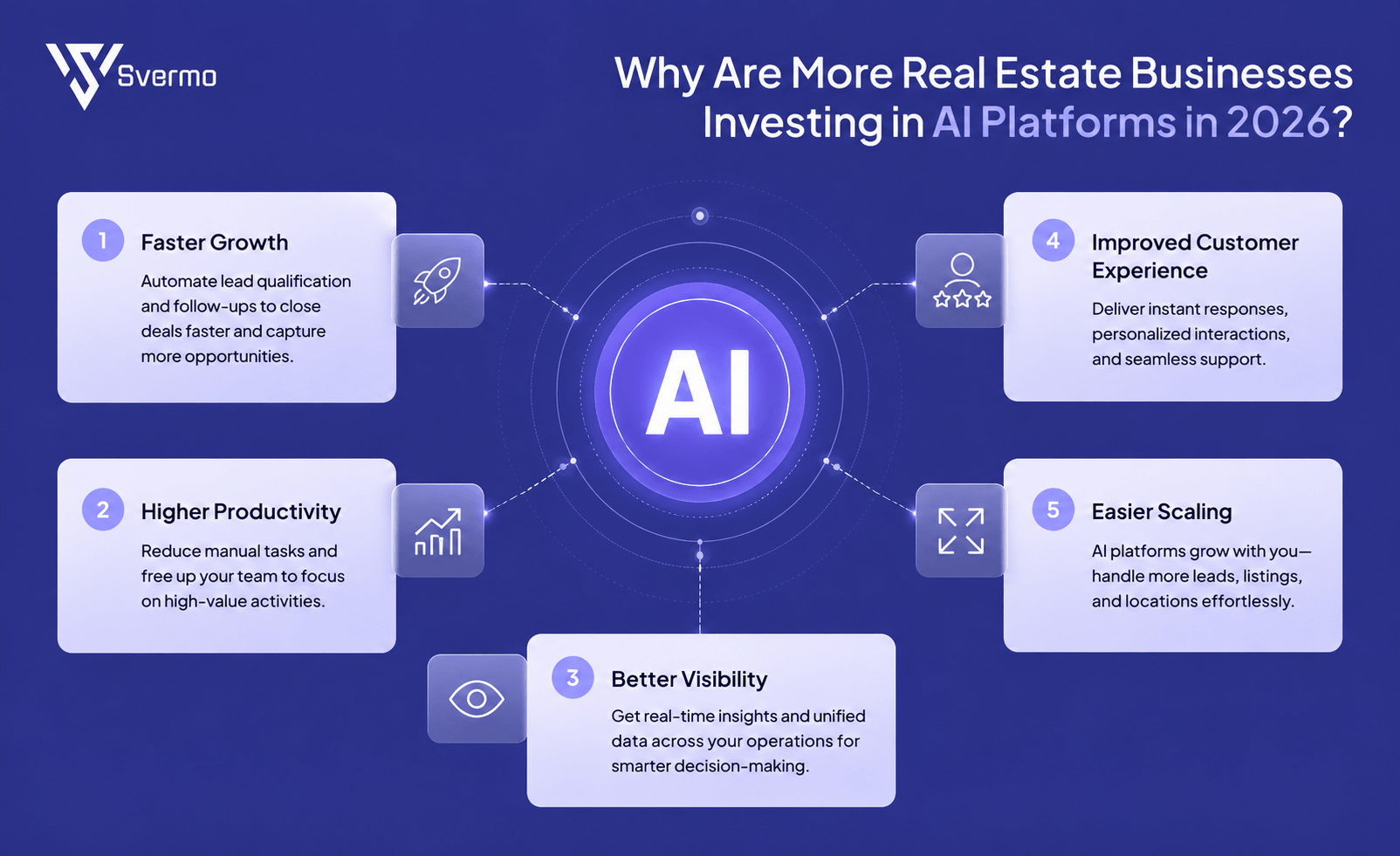
Businesses evaluating best AI platforms for real estate are rarely buying software simply to add another tool. Most teams are trying to solve larger operational challenges while preparing for growth, higher transaction volumes, and increasing customer expectations.
The conversation has shifted from individual productivity improvements to creating processes that allow businesses to scale more efficiently.
1. Faster Growth
Growing a brokerage or operations team often creates more complexity before it creates more revenue. Teams adopting AI platforms for real estate workflows are increasingly looking for ways to support growth without continuously increasing operational overhead.
Some common outcomes businesses target include:
- Supporting higher transaction volumes without proportionally increasing headcount
- Creating repeatable processes across multiple teams and locations
- Reducing operational bottlenecks that slow expansion efforts
2. Higher Productivity
Administrative work often consumes time that could otherwise be spent on revenue generating activities. Many businesses evaluating top AI powered platforms for real estate operations and automation want teams spending less time managing systems and more time moving deals forward.
As a result, organizations often prioritize improvements such as:
- Faster response times across sales and operations teams
- Reduced manual coordination between departments
- More time allocated toward customer interactions and revenue activities
3. Better Visibility
As organizations grow, leadership teams often struggle to understand where workflows slow down, where resources are being used inefficiently, and where opportunities are being missed. This is one reason many teams invest in AI-powered real estate operations management platforms that provide greater visibility across operations.
Better visibility usually creates advantages such as:
- More accurate performance tracking across teams
- Faster identification of workflow bottlenecks
- Improved operational decision making using centralized data
4. Improved Customer Experience
Customers increasingly expect faster communication, smoother transactions, and more consistent experiences across channels. Businesses using leading AI powered platforms for real estate agents and property managers often focus heavily on improving service quality while reducing operational friction.
This usually translates into improvements like:
- Faster communication across customer touchpoints
- More consistent experiences across teams and workflows
- Reduced delays during transactions and operational processes
5. Easier Scaling
Scaling becomes difficult when processes rely heavily on manual coordination or individual employees. Many teams evaluating most recommended AI platforms for real estate agents and brokers want systems that continue supporting growth without rebuilding operations every few years.
For growing businesses, that often means prioritizing:
- Standardized workflows across teams
- Better coordination between departments
- Infrastructure that supports future expansion initiatives
These outcomes explain why many businesses no longer view AI platforms as another software purchase. Increasingly, they are becoming part of how modern real estate organizations build operational foundations for future growth.
Understanding the potential outcomes is useful, but outcomes alone do not make one platform better than another. The bigger challenge is figuring out which platforms can actually deliver on those promises. See how we chose them.
How Did We Choose These Top AI Platforms for Real Estate Agents and Operations Teams?
Choosing between dozens of platforms can quickly become overwhelming.
Many solutions claim to automate workflows, improve productivity, or simplify operations. In reality, platforms vary significantly depending on team size, operational complexity, deployment requirements, and long-term scalability.
Rather than focusing only on popularity or feature lists, we evaluated platforms using criteria that matter most to businesses searching for the best AI platforms for real estate agents and operations teams.
1. Workflow Capabilities
Real estate businesses rarely operate inside a single workflow. Agents manage leads and transactions. Operations teams coordinate approvals and documentation. Property teams handle communication and ongoing processes. sdcdcdc\\\\
That is why we prioritized best AI platforms for real estate workflows that support multiple operational functions instead of isolated use cases.
Some factors considered included:
- Breadth of workflow coverage across teams
- Automation support across operational processes
- Flexibility to support different business models
- Support for complex real estate workflows across departments
2. Integration Flexibility
Most businesses already rely on existing systems. Replacing everything at once is rarely practical. We prioritized AI-powered platforms for real estate workflow automation that integrate with existing software rather than forcing organizations to completely rebuild technology stacks.
Evaluation criteria included:
- CRM compatibility
- Third party integrations
- API availability and ecosystem maturity
- Compatibility with existing operational software
3. Scalability
A platform that works for a small brokerage may struggle inside larger operations. We evaluated whether leading AI platforms for real estate property management and operations could support growing teams, larger transaction volumes, and increasing operational complexity without creating unnecessary friction.
To understand scalability, we looked at:
- Multiuser support and permissions
- Support for expanding workflows
- Ability to handle increasing operational volume
- Flexibility for future business growth
4. Ease of Implementation
Powerful software becomes less valuable if teams struggle to adopt it. Implementation complexity plays a major role in whether top AI powered platforms for real estate operations and automation generate value quickly or create operational disruption.
For this reason, we considered factors such as:
- Deployment requirements
- Learning curve for teams
- Configuration and onboarding complexity
- Resources required for rollout and adoption
5. Business Impact
Features alone rarely justify investment decisions. We prioritized top rated AI platforms for real estate operations teams, agents and brokers that demonstrate measurable business value across productivity, operational efficiency, and team performance.
This included evaluating:
- Operational improvements supported by the platform
- Potential productivity gains
- Alignment with real world real estate workflows
- Long term business impact across teams
Different businesses prioritize different outcomes.
Some need stronger agent productivity tools. Others require operational depth, workflow flexibility, or property management capabilities.
Keeping those differences in mind makes comparing the right AI platforms for real estate teams significantly easier once you start evaluating actual platforms.
With the evaluation framework in place, it becomes easier to move beyond marketing claims and focus on what actually matters: which platforms fit your workflows, your teams, and the way your business plans to grow.
Found too many platforms and not enough clarity?
Sometimes the fastest way to narrow options is seeing what operational fit actually looks like.
Which Are the 15 Best AI Platforms for Real Estate Agents and Operations Teams in 2026?
Finding the right platform often becomes difficult because most solutions claim similar benefits while solving very different problems.
Some platforms prioritize agent productivity. Others focus more heavily on operations, property management, workflow, or communication management.
The following platforms were selected based on operational capabilities, scalability, workflow support, and relevance for businesses trying to find the best AI platforms for real estate business.
1. Svermo
Headquarter: Florida, USA
Website: https://www.svermo.ai
Hourly pricing: $30-$60
As real estate businesses grow, workflows become increasingly connected. Leads move between teams, leasing activities require coordination, property operations create ongoing tasks, and customer communication continues long after transactions close.
Svermo positions itself as an operational AI platform designed for businesses looking to manage these workflows from a centralized environment. Rather than focusing only on isolated productivity improvements, the platform focuses on workflow execution across brokerages, leasing operations, property management activities, and customer interactions.
For organizations evaluating best AI platforms for real estate agents and operations teams, Svermo places stronger emphasis on operational coordination, workflow automation, and cross-team execution.
Core features
Svermo offers multiple AI products designed around operational execution rather than isolated use cases.
Some notable capabilities include:
- AI agents for lead qualification and engagement
- AI voice and leasing workflows
- Property operations automation
- Tenant communication management
- Workflow orchestration across teams
- Predictive intelligence capabilities
- Multi-agent workflow execution systems
- AI-powered virtual tours and property experiences
Key use cases
For brokers, agents, operations leaders, property managers, and leasing teams, the platform appears designed for organizations managing increasing workflow complexity across teams.
Some common applications include:
- Managing large inquiry volumes without increasing operational overhead
- Supporting AI platforms for real estate workflows across sales and operations teams
- Improving lead management processes across brokerages and leasing teams
- Supporting property operations teams with workflow automation
- Creating centralized visibility across fragmented operational processes
- Coordinating communication workflows between customers, agents, and internal teams
Best For
Svermo is likely a stronger fit for:
- Growing brokerages managing increasing operational complexity
- Property operations teams handling high workflow volume
- Real estate businesses consolidating fragmented workflows
- Organizations searching for AI-powered platforms for real estate workflow automation rather than isolated tools
- Mid market and enterprise teams looking for AI platforms for real estate operations teams rather than standalone productivity tools
2. Lofty
Headquarter: Scottsdale, Arizona, USA
Website: https://www.lofty.com/
Hourly pricing: $100-$149

Many brokerages looking for top AI platforms for real estate agents are trying to solve a common problem: connecting lead generation, agent productivity, marketing activities, and transaction workflows inside one environment.
Lofty positions itself as an AI powered platform focused primarily on helping brokerages, teams, and agents manage customer acquisition, communication, and transaction workflows more efficiently.
The platform combines CRM capabilities, marketing tools, automation, and AI functionality into a centralized environment designed specifically for real estate businesses.
Core features
Lofty provides multiple products designed around agent productivity and workflow management.
Some notable capabilities include:
- AI lead qualification and nurturing
- CRM and pipeline management
- AI powered marketing automation
- Smart lead routing capabilities
Key use cases
For brokers, agents, team leads, and growing real estate businesses, Lofty is typically positioned around customer acquisition and sales workflow optimization.
Some common applications include:
- Managing inbound leads across multiple acquisition channels
- Improving follow up speed using AI powered automation
- Supporting agent productivity across growing teams
- Centralizing customer communication workflows
Best for
Lofty is likely a stronger fit for:
- Growing brokerages focused on sales growth
- Real estate teams managing high lead volume
- Agents looking for stronger productivity workflows
- Businesses searching for top performing ai platforms for real estate operations management in USA with strong CRM capabilities
3. AppFolio
Headquarter: Santa Barbara, California, USA
Website: https://www.appfolio.com/
Hourly pricing: $150-$199
Many property operators evaluating leading AI platforms for real estate property management and operations are trying to solve a different challenge from traditional brokerages.
The focus is often less about transactions and more about managing ongoing operations across properties, tenants, leasin g workflows, accounting, maintenance, and communication.
AppFolio positions itself as an AI powered property management platform built primarily for residential, commercial, student housing, community associations, and large scale property operations.
Core features
AppFolio offers multiple products designed around property operations and management workflows.
Some notable capabilities include:
- AI leasing assistants
- Tenant communication workflows
- Property accounting and financial management
- Maintenance workflow automation
- Online leasing and application management
- AI powered reporting capabilities
Key use cases
For property managers, operations teams, leasing teams, brokers managing rental portfolios, and enterprise operators, AppFolio is designed around ongoing operational management rather than transaction focused workflows.
Some common applications include:
- Managing large property portfolios from centralized systems
- Improving leasing workflows using AI capabilities
- Supporting tenant communication across multiple properties
- Reducing manual work inside property operations teams
- Managing maintenance requests and operational tasks
Best for
AppFolio is likely a stronger fit for:
- Property management companies handling large portfolios
- Leasing teams managing high communication volumes
- Operations teams focused on ongoing property management
- Businesses prioritizing property operations over brokerage focused workflows
4. Follow Up Boss
Headquarter: Scottsdale, Arizona, USA
Website: https://www.followupboss.com/
Hourly pricing: Not mentioned
Many growing brokerages eventually face a similar challenge: lead generation increases faster than the team's ability to respond consistently.
Follow Up Boss positions itself as an AI enabled real estate CRM platform focused primarily on helping agents, brokers, and teams manage customer relationships, communication workflows, and sales processes more efficiently.
The platform is designed around helping businesses create faster response cycles while improving visibility across lead management workflows.
Core features
Follow Up Boss provides multiple capabilities designed around customer management and workflow coordination.
Some notable capabilities include:
- AI powered lead management workflows
- Smart communication automation
- Lead routing and distribution systems
- CRM and pipeline management
Key use cases
For brokers, agents, sales teams, and operations leaders, Follow Up Boss primarily focuses on improving sales coordination and customer lifecycle management.
Some common applications include:
- Managing large lead volumes more efficiently
- Improving speed to lead workflows
- Coordinating communication across teams
- Supporting customer relationship management activities
Best for
Follow Up Boss is likely a stronger fit for:
- Brokerages managing high lead volume
- Growing sales teams and agent networks
- Organizations focused heavily on customer acquisition workflows
5. Ylopo
Headquarter: Santa Monica, California, USA
Website: https://www.ylopo.com/
Hourly pricing: Undisclosed
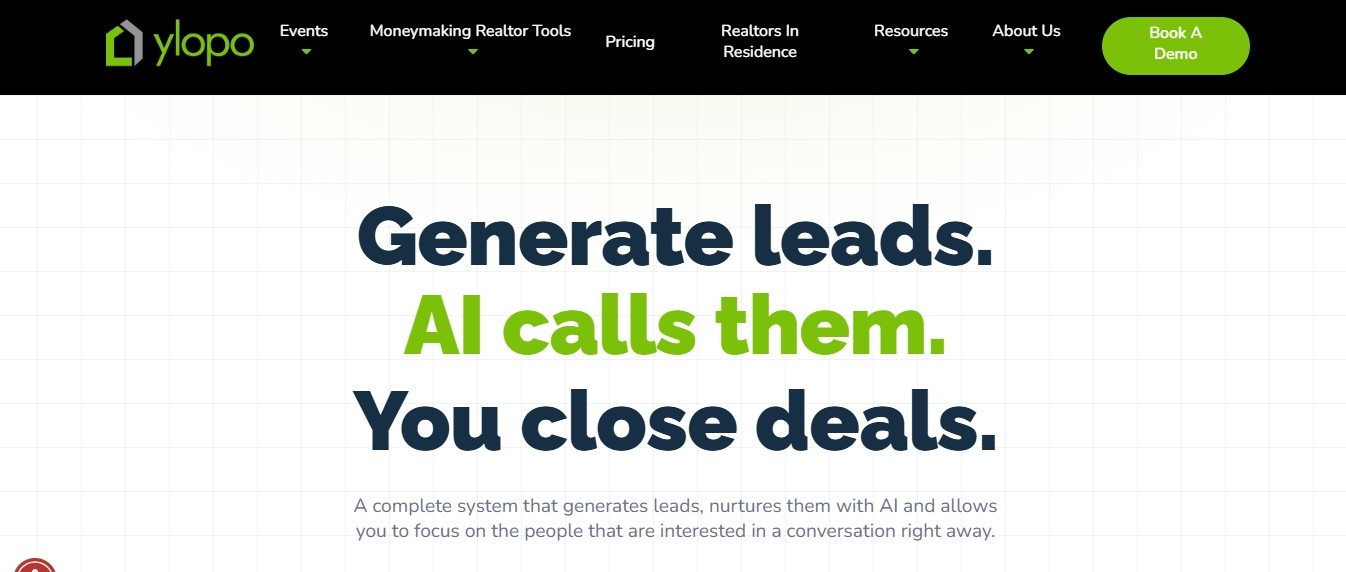
Many real estate teams generate leads successfully but struggle to consistently convert them into opportunities. As lead volume grows, maintaining personalized engagement across every customer interaction becomes increasingly difficult.
Ylopo positions itself as an AI powered real estate marketing and customer engagement platform focused on helping brokerages, agents, and teams improve lead generation, nurturing, and conversion workflows.
The platform combines advertising, customer engagement, AI communication capabilities, and sales workflow automation into a centralized environment built specifically for real estate businesses.
Core features
Ylopo offers multiple products focused on customer acquisition and engagement workflows.
Some notable capabilities include:
- AI powered lead nurturing
- AI voice assistants and communication tools
- Digital advertising automation
- Behavioral tracking and customer insights
- CRM integrations and workflow automation
Key use cases
For brokers, agents, team leaders, and growing sales organizations, Ylopo primarily focuses on customer acquisition and lead engagement workflows.
Some common applications include:
- Improving lead conversion across multiple acquisition channels
- Supporting personalized customer engagement using AI capabilities
- Improving customer response times and follow up consistency
Best for
Ylopo is likely a stronger fit for:
- Brokerages focused heavily on lead generation growth
- Sales organizations prioritizing customer engagement workflows
- Businesses evaluating smart AI tools for real estate agent productivity and operations
- Teams prioritizing marketing performance and customer acquisition workflows
6. Structurely
Headquarter: Ames, Iowa, USA
Website: https://www.structurely.com/
Hourly pricing: Not mentioned
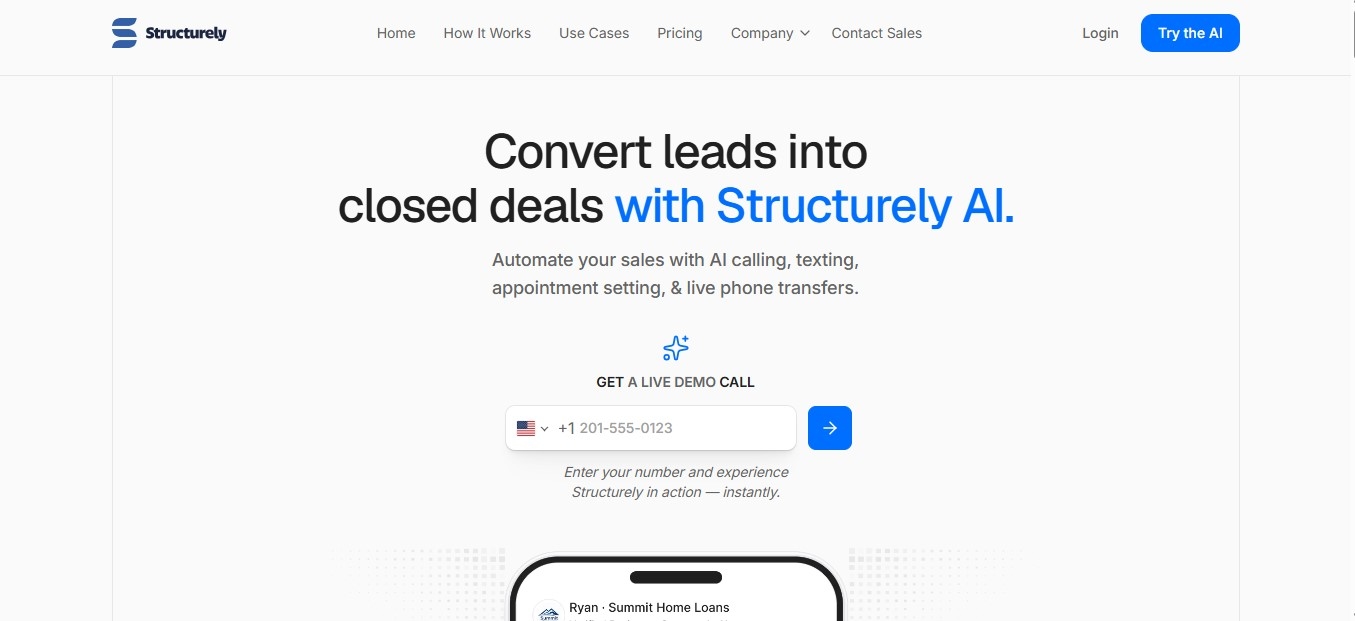
Many real estate teams struggle with a simple reality: leads often arrive outside business hours, during busy periods, or faster than agents can respond.
Structurely focuses primarily on conversational AI built specifically for real estate businesses. Rather than functioning as a broad operational platform, the company focuses heavily on AI-driven conversations, lead engagement, qualification, and customer interactions.
For organizations trying to increase conversion efficiency without continuously increasing staffing requirements, Structurely focuses on keeping conversations active throughout the customer journey.
Core features
Some notable capabilities include:
- AI powered conversational assistants
- Automated lead qualification
- SMS and email engagement workflows
- AI appointment scheduling
- CRM integrations
Key use cases
For brokers, agents, and sales focused teams, Structurely primarily supports communication intensive workflows.
Some common applications include:
- Managing after hours lead engagement
- Reducing response delays across sales teams
- Qualifying inbound inquiries automatically
- Supporting AI platforms for real estate workflows focused on customer engagement
Best for
Structurely is likely a stronger fit for:
- Brokerages generating large lead volumes
- Teams struggling with response speed
- Sales focused organizations
- Businesses prioritizing conversational AI capabilities
- Organizations focused primarily on lead qualification workflows
7. CINC
Headquarter: Charlotte, North Carolina, USA
Website: https://www.cincpro.com/
Hourly pricing: Not mentioned
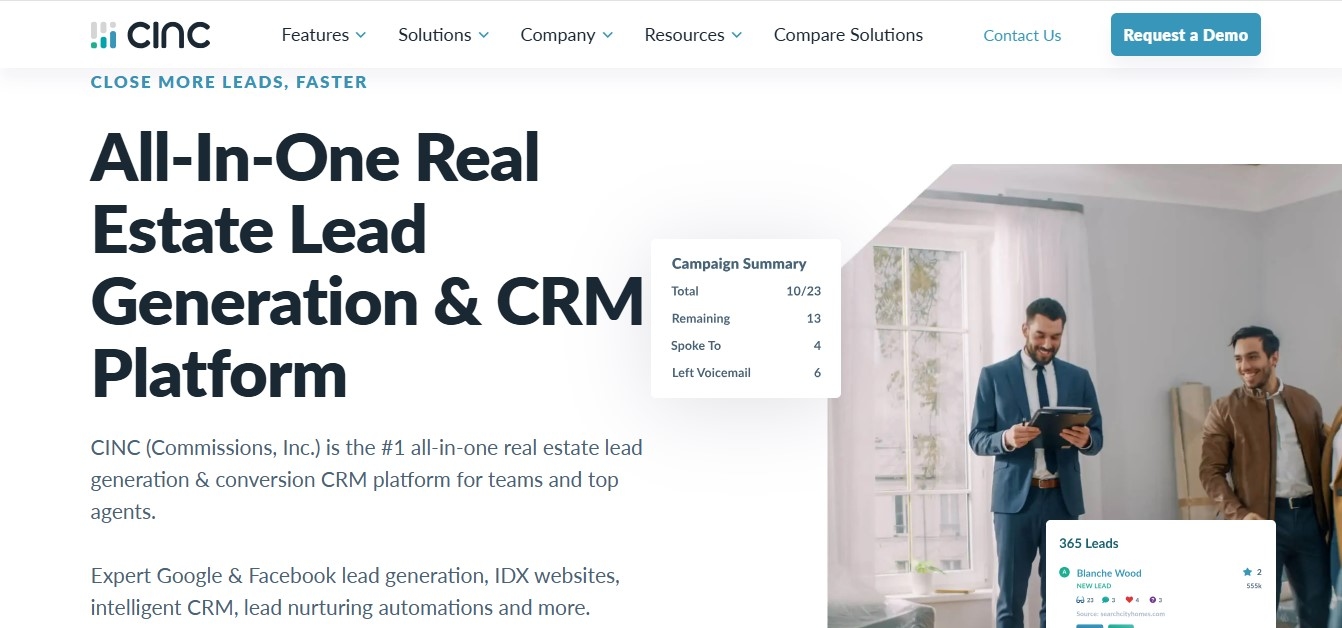
For many growing brokerages, scaling customer acquisition becomes increasingly difficult when marketing, lead generation, and customer management operate separately.
CINC positions itself as an AI powered customer acquisition and sales platform designed specifically for real estate teams looking to create more predictable growth systems.
The platform combines marketing technology, lead generation capabilities, CRM functionality, and AI tools inside a single ecosystem.
Core features
Some notable capabilities include:
- AI lead nurturing systems
- Marketing automation capabilities
- CRM and customer management tools
- AI communication workflows
Key use cases
For brokers, agents, and growing teams, CINC primarily focuses on customer acquisition and sales performance optimization.
Some common applications include:
- Scaling inbound lead generation efforts
- Managing large customer pipelines
- Improving marketing efficiency
- Supporting sales coordination across teams
Best for
CINC is likely a stronger fit for:
- High growth brokerages
- Teams investing heavily in customer acquisition
- Organizations prioritizing marketing performance
- Teams focused on pipeline growth and conversion
8. Homebot
Headquarter: Denver, Colorado, USA
Website: https://homebot.ai/
Hourly pricing: Not mentioned
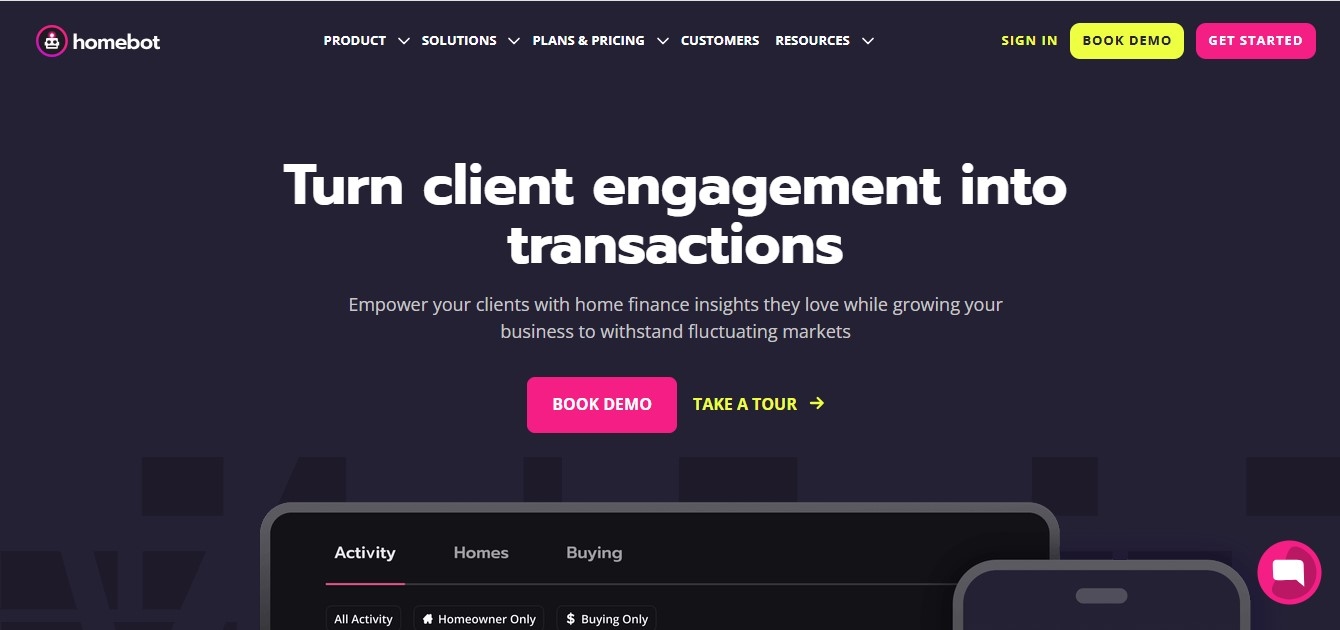
Homebot positions itself as an AI powered client engagement platform focused on helping real estate professionals maintain ongoing customer relationships using personalized insights and automated communication.
The platform focuses heavily on retention, repeat business, and long-term customer engagement.
Core features
Some notable capabilities include:
- AI powered customer insights
- Automated homeowner engagement workflows
- Personalized financial recommendations
- Customer retention automation
Key use cases
For brokers, agents, and relationship focused teams, Homebot primarily supports customer retention and long term engagement.
Some common applications include:
- Improving repeat business opportunities
- Increasing customer engagement after transactions
- Supporting referral generation workflows
- Maintaining personalized communication at scale
Best for
Homebot is likely a stronger fit for:
- Relationship driven agents and teams
- Businesses focused on repeat business growth
- Brokerages prioritizing retention strategies
- Organizations evaluating real estate agent productivity tools powered by artificial intelligence
9. LocalizeOS
Headquarter: New York, USA
Website: https://www.localize.city/
Hourly pricing: Undisclosed
Many property searches fail because buyers spend significant time researching neighborhoods, commute times, local risks, schools, transportation, and community information separately.
LocalizeOS positions itself as an AI powered location intelligence platform designed to help real estate businesses improve decision making using property and neighborhood insights.
The platform focuses heavily on helping businesses create more data driven buying, selling, and recommendation experiences.
Core features
Some notable capabilities include:
- AI powered location intelligence
- Property recommendation engines
- Neighborhood analytics
- Personalized search experiences
- Commute and lifestyle insights
Key use cases
For brokers, agents, buyer teams, and property advisors, LocalizeOS primarily supports decision making and customer advisory workflows.
Some common applications include:
- Supporting property recommendations using data driven insights
- Improving customer buying experiences
- Personalizing property search workflows
- Reducing research effort during customer interactions
Best for
LocalizeOS is likely a stronger fit for:
- Buyer focused brokerages
- Teams supporting relocation customers
- Agents managing high consultative sales cycles
- Organizations evaluating best AI platforms for real estate business focused on customer intelligence
10. EliseAI
Headquarter: New York, USA
Website: https://www.eliseai.com/
Hourly pricing: Undisclosed
Managing leasing operations often requires handling large volumes of conversations, scheduling requests, follow ups, and tenant interactions simultaneously.
EliseAI positions itself as an AI platform focused heavily on multifamily housing, leasing operations, and property management communication workflows.
The platform primarily focuses on helping leasing teams automate customer interactions while improving operational efficiency.
Core features
Some notable capabilities include:
- AI leasing assistants
- AI voice capabilities
- Automated scheduling workflows
- Resident communication automation
- Maintenance request management
Key use cases
For leasing teams, property operators, and multifamily organizations, EliseAI primarily supports communication intensive operational workflows.
Some common applications include:
- Automating leasing conversations
- Managing tenant interactions more efficiently
- Reducing operational workload for leasing teams
- Supporting resident communication at scale
- Improving leasing response times
Best for
EliseAI is likely a stronger fit for:
- Multifamily operators
- Leasing organizations managing large portfolios
- Property operations teams
- Businesses evaluating AI platforms for real estate operations teams focused on leasing workflows
11. Restb.ai
Headquarter: Texas, USA
Website: https://www.restb.ai/
Hourly pricing: Undisclosed
Property images contain valuable information, but manually reviewing large image volumes creates delays for listing teams, MLS organizations, and property operators.
Restb.ai positions itself as an AI computer vision platform built specifically for real estate image intelligence and property data extraction.
The platform focuses on helping businesses automate image analysis workflows while improving listing quality and operational efficiency.
Core features
Some notable capabilities include:
- AI powered image recognition
- Property feature detection
- Image tagging automation
- Listing quality analysis
- Property condition recognition
- MLS workflow integrations
Key use cases
For MLS operators, brokers, listing teams, and property platforms, Restb.ai primarily supports listing intelligence workflows.
Some common applications include:
- Improving listing quality control
- Automating image tagging processes
- Supporting property classification workflows
- Supporting AI powered real estate operations management platforms focused on listing workflows
Best for
Restb.ai is likely a stronger fit for:
- MLS organizations
- Listing heavy brokerages
- PropTech companies
- Businesses evaluating top AI powered platforms for real estate operations and automation focused on visual intelligence
12. HouseCanary
Headquarter: San Francisco, California, USA
Website: https://www.housecanary.com/
Hourly pricing: Undisclosed
Real estate decisions increasingly depend on accurate valuation, forecasting, and market intelligence. Many organizations still spend significant time combining data from multiple sources before making investment, pricing, or acquisition decisions.
HouseCanary positions itself as an AI powered real estate analytics platform focused on property intelligence, valuation modeling, and predictive market analysis.
The platform primarily helps organizations make more informed decisions using large scale property data and forecasting models.
Core features
Some notable capabilities include:
- AI powered property valuation models
- Predictive market analytics
- Investment analysis tools
- Property data intelligence
Key use cases
For brokers, investors, property operators, and analytics teams, HouseCanary primarily supports data intensive decision making.
Some common applications include:
- Improving property valuation accuracy
- Supporting investment analysis workflows
- Forecasting market opportunities
- Analyzing portfolio performance
Best for
HouseCanary is likely a stronger fit for:
- Investment focused organizations
- Brokerages requiring valuation intelligence
- Portfolio management teams
- Businesses evaluating AI driven property operations platform for real estate teams
- Organizations prioritizing market intelligence and forecasting capabilities
13. SmartZip
Headquarter: Newport Beach, California, USA
Website: https://smartzip.com/
Hourly pricing: Undisclosed
Generating consistent opportunities becomes increasingly difficult when teams rely heavily on broad marketing strategies rather than targeted customer acquisition.
SmartZip positions itself as an AI powered predictive marketing platform focused on helping real estate professionals identify likely sellers and prioritize outreach efforts.
The platform focuses heavily on predictive modeling, customer targeting, and marketing efficiency.
Core features
Some notable capabilities include:
- AI powered predictive analytics
- Seller prediction models
- Marketing automation workflows
- Customer segmentation tools
- Lead prioritization capabilities
Key use cases
For brokers, agents, and marketing teams, SmartZip primarily supports customer acquisition and targeting activities.
Some common applications include:
- Identifying high probability seller opportunities
- Improving marketing efficiency
- Prioritizing outreach activities
- Reducing wasted acquisition spend
- Supporting top AI platforms for real estate agents focused on predictive marketing
Best for
SmartZip is likely a stronger fit for:
- Sales focused brokerages
- Teams prioritizing seller acquisition
- Marketing heavy organizations
- Businesses evaluating best AI platforms for real estate agents in 2026
- Organizations focused on predictive customer acquisition strategies
14. Cherre
Headquarter: New York, USA
Website: https://cherre.com/
Hourly pricing: Undisclosed
Large real estate organizations often struggle less with missing data and more with disconnected data. Information exists across leasing systems, accounting platforms, CRM tools, operational software, and property systems.
Cherre positions itself as an AI powered real estate data platform focused on creating centralized data infrastructure for operational decision making.
The platform focuses heavily on connecting fragmented data environments while enabling analytics, reporting, and operational visibility.
Core features
Some notable capabilities include:
- AI powered data integration
- Property data infrastructure tools
- Workflow automation capabilities
- Portfolio intelligence systems
- Reporting and analytics capabilities
Key use cases
For operations leaders, property managers, innovation teams, and enterprise organizations, Cherre primarily supports data management and operational visibility workflows.
Some common applications include:
- Unifying disconnected operational systems
- Supporting portfolio analytics workflows
- Improving data quality across teams
- Enabling centralized reporting capabilities
Best for
Cherre is likely a stronger fit for:
- Enterprise real estate organizations
- Property operations teams
- Innovation and data teams
- Organizations prioritizing data infrastructure and operational visibility
At this stage, you probably already have a few platforms in mind. The challenge now is understanding where each one fits and where limitations start appearing.
Which of these AI platforms for real estate agents and operations teams perform best when compared across the factors buyers actually care about?
Did one platform catch your attention already?
The real question is whether it fits your workflows, teams, and growth plans.
Which AI Platform Actually Fits Your Real Estate Business?: A Head-to-Head Comparison
Looking at platforms individually helps explain capabilities, but comparing them side by side makes it easier to understand where the best AI platforms differ in practice.
The comparison below provides a simplified view of how these top AI platforms for real estate agents and operational teams based on their primary focus and where they fit best.
| Platform | Primary Focus | Best Fit |
|---|---|---|
Svermo | Operational workflows, automation, property operations | Growing brokerages, operations teams, enterprise real estate businesses |
Lofty | CRM, marketing, lead management | Sales focused brokerages and growing agent teams |
AppFolio | Property operations and management | Property managers and leasing organizations |
Rechat | Brokerage workflows and marketing | Brokerages managing multiple agents and teams |
Follow Up Boss | CRM and lead management | Teams managing large lead volumes |
Ylopo | Lead generation and customer engagement | Marketing driven brokerages |
Structurely | Conversational AI and lead qualification | Sales teams focused on response speed |
CINC | Customer acquisition and pipeline management | Growth focused brokerages |
Homebot | Retention and customer engagement | Relationship focused agents and teams |
LocalizeOS | Property intelligence and buyer insights | Buyer focused teams and advisors |
EliseAI | Leasing automation and communication | Multifamily operators and leasing teams |
Restb.ai | Image intelligence and listing optimization | MLS organizations and listing teams |
HouseCanary | Valuation and predictive analytics | Investment and analytics focused organizations |
SmartZip | Predictive marketing and seller targeting | Brokerages focused on seller acquisition |
Cherre | Data infrastructure and operational visibility | Enterprise real estate organizations |
The comparison makes one thing clear: platforms that appear similar often solve very different business problems, support different workflows, and create value for different types of teams.
But how do you narrow down the right platform when team size, operational complexity, growth plans, and workflows all look different?
How Do You Choose the Right AI Platform for Real Estate Teams and Operations Workflows?
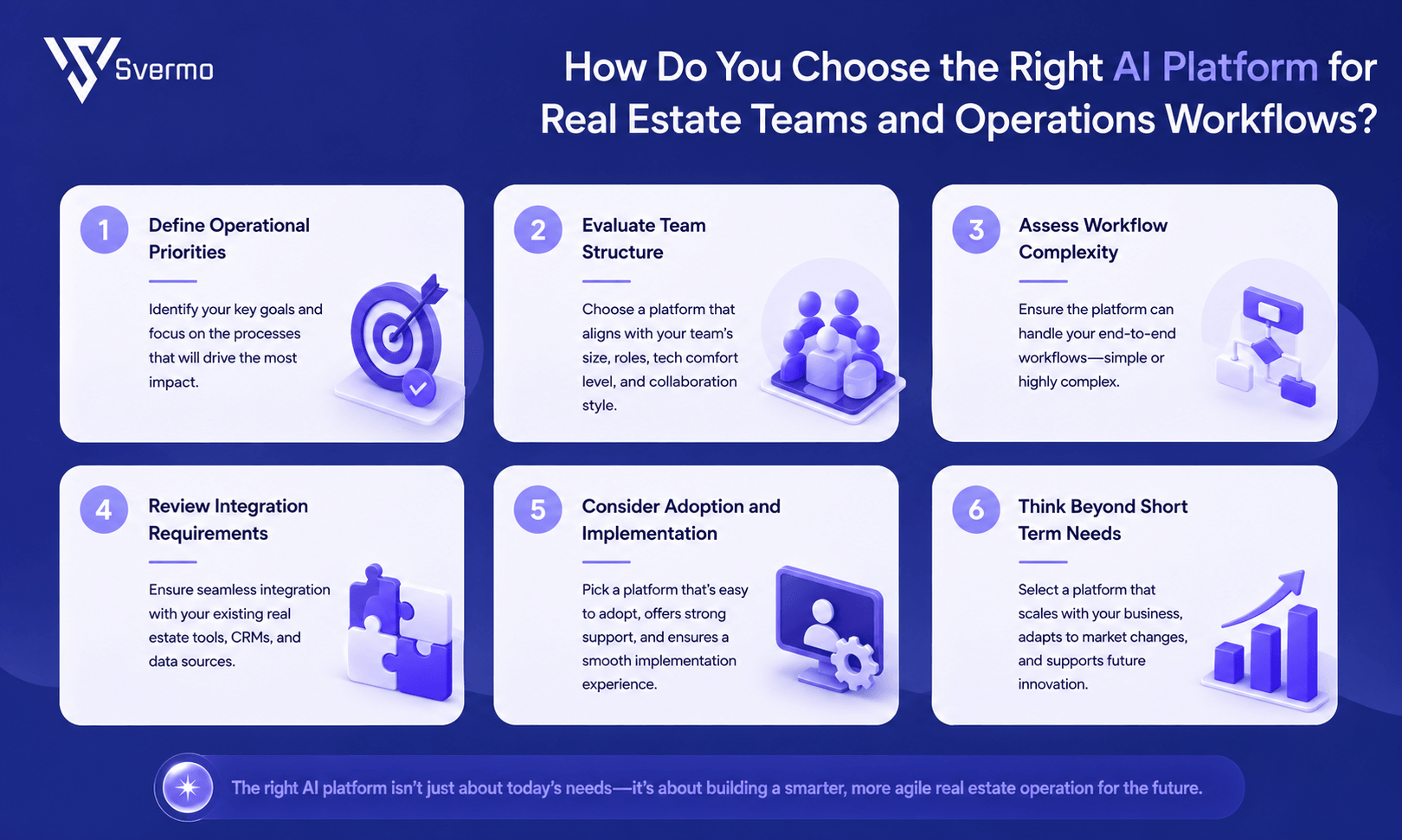
Finding the right AI platforms for real estate teams often becomes difficult because businesses rarely have identical workflows, growth plans, or operational challenges.
A platform that works well for a growing brokerage may not fit a leasing team managing thousands of tenant interactions. Rather than focusing only on features, start by understanding how the platform fits your business requirements.
Define Operational Priorities
Before comparing vendors, identify the problems you are actually trying to solve. Some organizations focus heavily on customer acquisition. Others focus on operational efficiency, property management, communication workflows, or customer retention.
This is often where buyers start asking:
"How do I choose the best AI platform for my real estate agents and property operations team?"
Questions worth asking include:
- Which workflows create the most friction today?
- Which processes consume the most time?
- Which teams need the most operational support?
- Which business outcomes matter most?
Evaluate Team Structure
The platform requirements for independent agents and enterprise operations teams rarely look the same. Businesses searching for best AI platforms for real estate should consider both current team structure and future growth plans.
Factors that often influence platform fit include:
- Team size and operational complexity
- Number of users and departments involved
- Geographic expansion plans
- Growth expectations over time
Organizations tracking best AI platforms for real estate agents in 2026 often discover that scalability requirements become more important as teams expand.
Assess Workflow Complexity
Many businesses underestimate workflow complexity during evaluation. Simple sales workflows require different capabilities compared to organizations managing listings, leasing, customer support, property operations, and communication simultaneously.
This becomes especially important when evaluating real estate workflow automation and AI platform solutions.
Consider questions such as:
- How many workflows need automation?
- How many systems require integration?
- How much customization will be required?
- How many departments will use the platform?
Review Integration Requirements
Few organizations operate using one software platform.
The top AI powered platforms for real estate should fit existing technology environments rather than forcing businesses to rebuild everything.
This becomes increasingly important for organizations that want to invest in AI driven property operations platform for real estate teams with multiple systems already in place.
Areas worth evaluating include:
- CRM compatibility
- API availability
- Third party integrations
- Data synchronization capabilities
Consider Adoption and Implementation
The most advanced platform still fails if teams struggle to adopt it. Implementation planning often matters just as much as platform selection.
Businesses researching which are the best AI platforms for real estate agents and operations teams in USA often underestimate how much adoption influences success.
Evaluate factors such as:
- Learning curve for users
- Deployment complexity
- Training requirements
- Change management effort
Think Beyond Short Term Needs
Many businesses purchase platforms based only on immediate problems. Long term scalability usually becomes more important later.
Organizations evaluating AI platforms for real estate operations teams should consider them if they can support future workflows, expanding teams, and changing business requirements.
This is often the difference between selecting software that solves today's problems and investing in smart AI tools for real estate agent productivity and operations that continue supporting growth years later.
Areas worth evaluating include:
- Ability to support growing teams and operational volume
- Flexibility to add new workflows as requirements change
- Long term pricing sustainability as usage increases
- Support for future integrations and operational expansion
Platform selection becomes much easier once you stop asking, "Which platform has the most features?" A more useful question is usually "Which platform aligns most closely with how our business actually operates?"
By this stage, you probably have a better idea of what type of platform fits your business. The next question becomes equally important: what problems should you prepare for before implementation begins?
What Risks Should You Consider Before Adopting AI Platforms for Real Estate Operations Teams and How to Avoid Them?
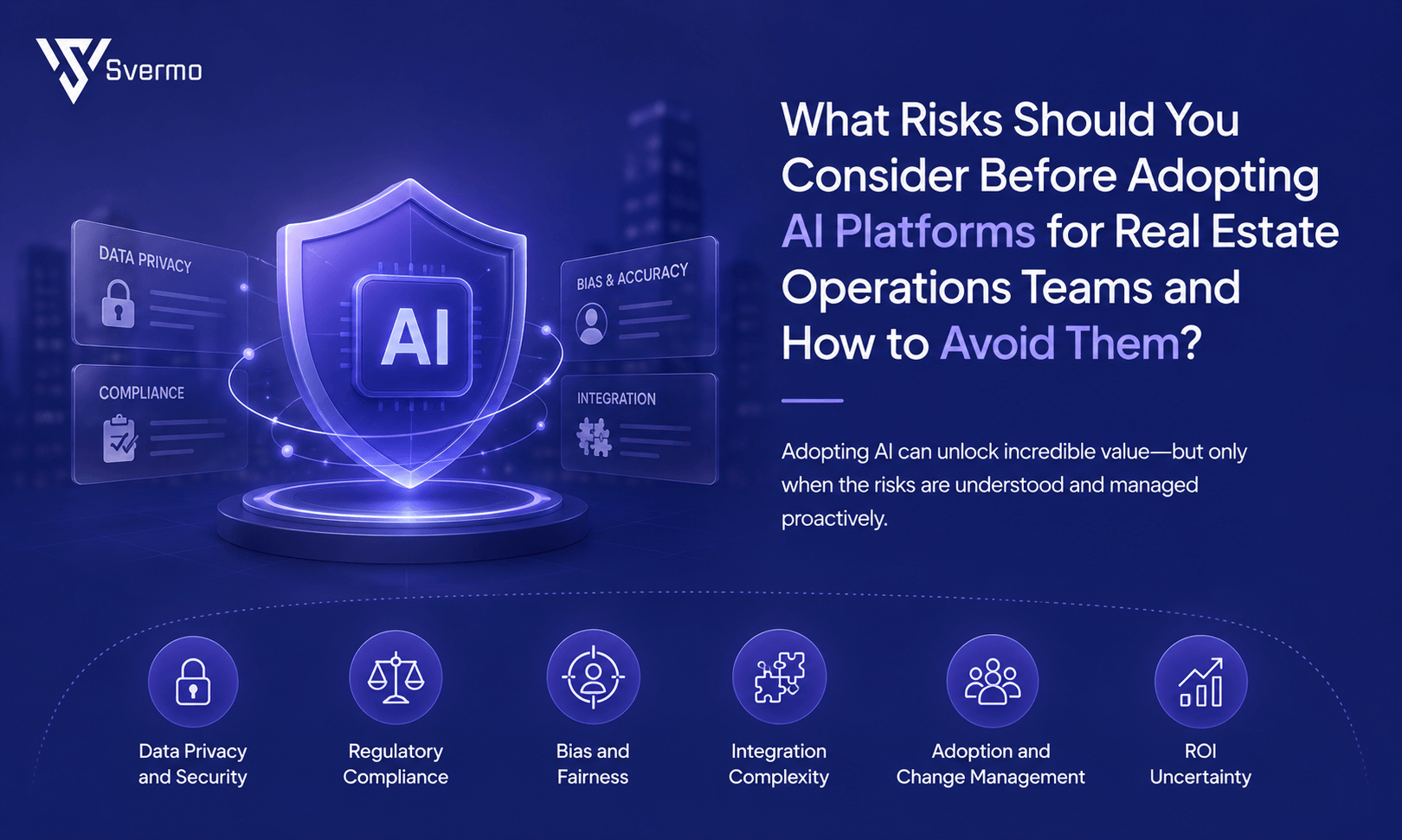
Platform adoption also introduces implementation risks that many businesses underestimate during evaluation. Most challenges rarely come from the technology itself.
The table below outlines some common risks businesses encounter when implementing AI platforms for real estate operations teams, their potential impact, and practical ways to reduce those risks.
| Risk | Potential Impact | How To Avoid It |
|---|---|---|
Poor user adoption | Teams continue using old processes, reducing platform value and slowing ROI | Involve users early, provide training, and create clear rollout plans |
Choosing the wrong platform | Operational inefficiencies remain even after implementation | Prioritize workflow requirements before comparing features |
Over automating workflows | Poor customer experiences and broken processes | Automate repetitive tasks first and maintain human oversight where needed |
Integration challenges | Data silos, workflow disruption, and operational delays | Review integration requirements and API support before deployment |
Poor data quality | Inaccurate reporting, automation failures, and unreliable insights | Standardize data processes before implementation |
Vendor lock in | Difficulty switching platforms later | Evaluate contract terms, export capabilities, and integration flexibility |
Implementation complexity | Delayed deployment timelines and increased costs | Roll out gradually rather than attempting full deployment immediately |
Security and compliance concerns | Increased operational risk and data exposure | Review governance, permissions, access controls, and compliance requirements |
Unrealistic ROI expectations | Leadership frustration and failed adoption initiatives | Define measurable goals before deployment and track progress consistently |
These risks should not discourage implementation. In many cases, they simply highlight why platform selection, planning, and deployment strategy matter just as much as the technology itself.
Not sure which platform matches your business model?
The right platform should fit your operations, not force your operations to fit the platform.
Wrapping Up!
Choosing among the best AI platforms for real estate agents and operations teams rarely comes down to features alone. The right platform depends on your workflows, team structure, operational complexity, and growth plans.
That is why many organizations searching for AI platforms for real estate workflows often arrive at very different decisions depending on business priorities.
The important part is selecting technology that supports how your teams operate today while creating flexibility for future growth.
For businesses looking beyond isolated software and craving for AI powered real estate operations management platforms, Svermo stands out by combining AI driven workflows, leasing support, automation capabilities, property operations management, and execution systems inside a centralized environment built specifically for real estate businesses.
As adoption continues accelerating across brokerages, property operations teams, leasing organizations, and growing businesses, AI powered platforms are increasingly becoming part of long-term operational strategy rather than short term productivity initiatives.
The businesses creating the strongest operational advantages are often those selecting leading AI powered platforms for real estate agents and property managers that align with workflows, growth plans, and operational requirements.
If you are looking for the right AI platforms for your real estate teams that can support growth, operational efficiency, and long-term scalability, then contact us.
 https://www.linkedin.com/in/saanvi-verma-38711a36a
FAQs
Start by identifying operational priorities before comparing platforms. Team size, workflow complexity, integrations, and growth plans usually determine which AI platforms for real estate operations fit best. The right platform should support how your business operates rather than simply offering more features.
Focus on workflow coverage, integrations, scalability, implementation complexity, and long-term fit. The right AI platforms for real estate teams should support both current requirements and future growth without creating additional operational complexity
If disconnected workflows, manual processes, and operational inefficiencies are slowing growth, centralized AI powered platforms for real estate workflow automation often create better long-term outcomes. The decision depends more on operational challenges than software age.
Yes. Many best AI platforms for real estate agents in USA support independent agents, small brokerages, and growing teams. Smaller organizations often use AI to reduce manual work, improve response times, and support growth efficiently.
No. Most AI powered real estate operations management platforms are designed to automate repetitive tasks and improve productivity rather than replace teams. Human relationships, negotiations, and customer interactions remain critical.
Common mistakes include focusing only on features, underestimating implementation effort, ignoring integrations, and selecting platforms that do not match operational requirements. Poor adoption planning also creates unnecessary challenges.
ROI varies depending on implementation and workflows, but businesses often measure improvements through reduced manual work, faster response times, lower operational costs, and higher productivity. Stronger ROI usually comes from aligning technology with operational priorities.
Still have questions before making a decision?
Platform selection gets easier when you map technology decisions to operational goals.