

Top Real Estate AI Technologies Transforming Property Operations in 2026


Get a summary of this article with your favorite AI





AI Summary
- •Top real estate AI technologies for property operations streamline leasing, tenant management, CRM, and rent collection.
- •The most valuable use cases include leasing automation, tenant screening, property search, and real estate workflow automation.
- •Successful AI adoption starts with fixing operational bottlenecks and connecting data.
- •Common challenges include fragmented systems, poor data quality, and adoption barriers.
- •Future AI property operations platforms will combine automation, operational intelligence, and predictive decision-making.
- •Svermo helps modernize property operations with AI-powered leasing, tenant management, CRM, and workflow automation.
Managing property operations today means balancing leasing, tenant communication, rent collection, maintenance requests, and portfolio performance, often across multiple systems and teams.
How much time does your team spend on repetitive administrative work every week? How many leasing opportunities are lost because prospects don't receive timely responses? How often do manual processes slow down your operations?
These challenges are exactly why top real estate AI technologies for property operations are becoming a priority for real estate businesses seeking greater efficiency, scalability, and operational visibility.
The shift is already underway. Reports say that over 90% of leading real estate firms in USA now consider AI a strategic priority, and more than 60% have active pilot programmes in place. The focus is no longer on experimenting with AI. It's on finding practical technologies that solve everyday operational challenges.
One area receiving significant attention is lead and tenant management. Many organizations are investing in modern AI-powered real estate CRM because disconnected systems and manual follow-ups create unnecessary delays throughout the leasing process. Real estate CRM software are helping teams centralize prospect interactions, automate follow-ups, and improve operational consistency.
For USA based real estate stakeholders like you, knowledge of these modern AI technologies has become necessary in 2026. But before going deep down into technologies, it's important to understand what real estate AI technologies actually are?
Still Managing Property Operations the Hard Way?
The right AI technology can eliminate hours of repetitive work before it becomes an operational bottleneck.
What Are Real Estate AI Technologies and Why Are Property Teams Adopting Them?
Real estate AI technologies are software systems that use data, automation, and intelligence to handle operational tasks that traditionally required manual effort.
Instead of relying on staff to manage every inquiry, update records, process requests, or coordinate workflows, these technologies help automate routine activities while providing better visibility across operations.
For many real estate businesses in US, operational inefficiencies aren't caused by a lack of people. They're caused by disconnected processes.
Therefore, AI real estate automation platforms and enterprise property operations software are gaining traction across residential, commercial, and mixed-use portfolios.
These technologies help solve common operational challenges such as:
- Delayed responses to leasing inquiries that result in lost opportunities.
- Manual tenant communication that consumes valuable staff time.
- Repetitive CRM updates that create data accuracy issues.
- Slow rent collection follow-ups and payment tracking.
- Limited visibility into portfolio performance across multiple properties.
- Operational bottlenecks caused by disconnected software systems.
Modern AI property operations platforms are being adopted by the real estate industry in United States because they deliver measurable business outcomes.
Instead of focusing on individual tasks, they improve efficiency across the entire property lifecycle.
Some of the most common benefits include:
- Faster leasing cycles through automated prospect engagement.
- Improved tenant satisfaction with quicker response times.
- Reduced administrative workloads for operations teams.
- Better decision-making through real-time operational insights.
- Increased scalability without proportionally increasing headcount.
- More consistent processes across multiple properties and locations.
The technologies we'll cover next address these challenges in different ways. Some focus on leasing and tenant management. Others improve financial operations, asset performance, or portfolio visibility.
Understanding the work mechanism of these real estate technologies is the first step to know how they create the greatest impact on your organization.
How AI Technologies Work in Real Estate Property Operations?
Many real estate leaders in U.S. understand the benefits of AI but not how it works in day-to-day operations. Most AI property operations platforms follow a straightforward process. They collect data from existing systems, identify patterns, and automate routine tasks.
For example, when a prospect submits a leasing inquiry, the system can capture the lead, schedule a tour, update records, and send follow-ups automatically. The same approach supports tenant management, rent collection, property search, maintenance, and asset management.
Most advanced AI systems for real estate workflow management operate through four core stages:
1. Data Collection
Every AI-powered property operations platform starts with data.
Before a system can automate tasks or generate insights, it needs access to information from the tools your team already uses. Modern AI real estate technologies connect with multiple systems to create a unified view of property operations.
AI technologies gather information from multiple sources, including:
- Property management software
- Leasing platforms
- CRM systems
- Tenant communication channels
- Payment and accounting systems
- Property databases
By bringing this information together, AI technologies for real estate in USA eliminate the need to manually switch between systems to find answers.
For example, an integrated real estate AI property search engine can continuously gather and organize property information, making it easier for teams to access accurate data across portfolios.
This creates a centralized operational view instead of isolated data silos.
2. Analysis and Pattern Recognition
Once data is collected, the system evaluates operational activity and identifies trends.
This is where AI systems begin turning raw information into actionable insights. Instead of reviewing spreadsheets, reports, or dashboards manually, the system continuously analyzes activity across properties, tenants, prospects, and financial operations.
For example, it can:
- Detect leasing bottlenecks
- Identify tenant communication delays
- Flag payment risks
- Highlight occupancy trends
- Monitor property performance metrics
These insights help property managers and operations leaders identify issues before they become larger problems.
Whether it's a drop in lead conversion rates or an increase in late payments, AI can surface patterns that might otherwise go unnoticed.
At this point property operations intelligence and AI-driven property management analytics begin delivering value.
3. Automated Decision-Making
Based on predefined rules and historical patterns, AI can recommend or initiate actions automatically.
Rather than simply identifying issues, modern AI property management technologies can take the next step by executing routine actions on behalf of your team. This reduces delays and ensures important tasks are completed consistently.
Examples include:
- Assigning leads to leasing agents
- Prioritizing tenant requests
- Sending payment reminders
- Triggering follow-up communications
- Routing maintenance tickets
This level of real estate workflow automation helps reduce manual coordination across departments while improving response times and operational efficiency.
4. Continuous Optimization
AI systems don't stop after automating a task once.
As they process more operational data, they identify what is working, where delays occur, and how workflows can be improved. This helps property teams operate more efficiently over time without constantly redesigning processes.
Continuous optimization can help:
- Improve lead qualification accuracy based on leasing outcomes.
- Reduce response times by identifying communication bottlenecks.
- Refine follow-up sequences to increase leasing conversions.
- Detect recurring operational issues across properties.
- Improve forecasting for occupancy, revenue, and tenant retention.
- Support portfolio growth without significantly increasing administrative workload.
As more operational data becomes available, the system improves recommendations and workflow efficiency over time.
Unlike traditional software that follows static rules, next-gen AI technologies for real estate operational efficiency and automation platforms learn from ongoing activity. They continuously evaluate outcomes and refine processes based on what is working best across your portfolio.
Knowing how these technologies work will take you to the most important question that is which ones are delivering the greatest operational impact in 2026?
How Much Time Could Your Team Get Back Every Week?
From leasing and tenant communication to rent collection, AI works best when it handles the tasks your team shouldn't have to.
Which AI Technologies Are Real Estate Businesses Adopting in 2026?
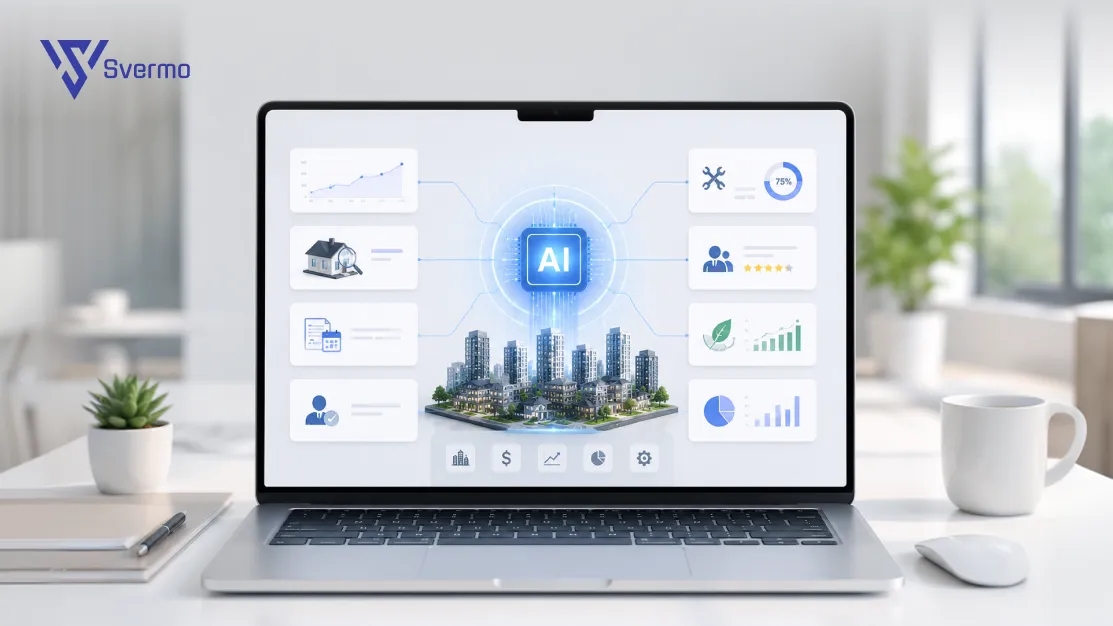
The top real estate AI technologies for property operations solve different challenges across leasing, tenant management, payments, and portfolio oversight. Together, these leading real estate AI platforms for operational automation help create more efficient, connected property operations.
1. AI Leasing Assistant Software
One of the biggest challenges in property operations is responding to leasing inquiries quickly and consistently.
Prospects expect answers immediately, but leasing teams often juggle dozens of conversations, tour requests, and follow-ups every day.
This is why AI leasing assistant software has become one of the most widely adopted innovative real estate AI systems for leasing and tenant management.
How It Works
An AI leasing assistant handles routine leasing interactions automatically.
What it does:
- Answer availability and pricing questions
- Schedule property tours
- Qualify prospects
- Send follow-ups
- Update CRM records
- Route qualified leads to leasing teams
Because the technology works around the clock, prospects receive assistance even outside business hours.
Use Case Example
A prospect submits an inquiry for a two-bedroom apartment at 10:00 PM.
Instead of waiting until the next day, an the AI assistant responds instantly, answers questions about availability, suggests tour times, collects contact details, and updates the leasing pipeline automatically.
When the leasing team starts work the next morning, the prospect has already been qualified and scheduled for a tour.
Key Benefits
- Faster response times
- Higher lead conversion rates
- Reduced manual follow-ups
- Better prospect experience
- Increased leasing team productivity
For organizations managing large inquiry volumes, AI leasing assistants often become the first step toward broader real estate workflow automation.
2. AI Tenant Screening Platforms
Tenant screening directly impacts occupancy, risk management, and tenant quality. However, reviewing applications manually can slow leasing teams down, especially during high-demand periods.
This is the reason the AI tenant screening platforms have become one of the most important top-rated AI tools for tenant screening and leasing management.
How It Works
AI screening platforms evaluate applicant information against predefined requirements and risk indicators.
They:
- Verify applicant information
- Identify incomplete applications
- Detect potential fraud risks
- Flag inconsistencies across documents
- Prioritize qualified applicants for review
Rather than replacing leasing decisions, these platforms help teams evaluate applications more consistently and efficiently.
Use Case Example
A newly listed apartment receives dozens of applications within a few days.
Instead of manually reviewing every submission, AI tenant screening software automatically validates application details, highlights missing information, and flags applications that require additional review.
Leasing teams spend less time processing paperwork and more time moving qualified applicants through the approval process.
Key Benefits
- Faster application reviews
- More consistent screening processes
- Reduced administrative workload
- Improved risk visibility
- Faster tenant onboarding
While tenant screening helps qualify applicants, real estate businesses also need a reliable way to manage leads, conversations, and follow-up activities throughout the customer journey.
That's where AI-powered CRM platforms play an increasingly important role.
4. AI-Powered Real Estate CRM Systems
Capturing leads is only the first step. The real challenge is managing conversations, tracking engagement, and ensuring every prospect receives timely follow-up.
As lead volume increases, manual CRM updates often become inconsistent. Important interactions get missed, follow-ups are delayed, and sales pipelines become difficult to manage.
This is why AI-powered CRM systems have become one of the most widely adopted advanced AI systems for real estate workflow management.
How It Works
Unlike traditional CRM platforms that rely heavily on manual updates, AI-powered CRM systems automatically organize and manage prospect interactions.
These systems:
- Capture leads from multiple channels
- Track prospect engagement
- Recommend follow-up actions
- Prioritize high-intent leads
- Update records automatically
- Generate pipeline insights
The goal is to help teams spend less time maintaining data and more time building relationships.
Use Case Example
A brokerage receives leads from property portals, paid advertising campaigns, website forms, and social media inquiries.
Instead of manually entering information into spreadsheets or updating records after every interaction, AI CRM software automatically captures lead details, records conversations, tracks engagement activity, and assigns follow-up tasks to the appropriate agents.
When a prospect repeatedly views listings, opens emails, and requests property information, the system identifies them as a high-priority opportunity and alerts the sales team.
This helps agents focus their time on prospects who are most likely to convert.
Key Benefits
- Improved lead management
- Better follow-up consistency
- Higher lead conversion rates
- Increased sales visibility
- Reduced manual CRM updates
- More accurate pipeline reporting
While CRM platforms help manage customer relationships, many operational processes still require coordination across departments, systems, and teams.
This is where real estate workflow automation technologies create the next layer of operational efficiency.
5. Real Estate Workflow Automation Technologies
Many property operations teams don't struggle because they lack software. They struggle because important processes are spread across multiple systems and require constant manual coordination.
Lease approvals, maintenance requests, onboarding tasks, compliance checks, and internal notifications often involve several people and departments.
How It Works
Workflow automation technologies connect operational processes and trigger actions automatically when specific conditions are met.
These systems:
- Route tasks to the right teams
- Trigger approvals automatically
- Create and assign work orders
- Send notifications and reminders
- Update multiple systems simultaneously
- Track process completion in real time
Instead of relying on manual handoffs, workflows move automatically from one stage to the next.
Example
A tenant signs a lease agreement for a new apartment.
Traditionally, this might require staff to manually update records, notify accounting, prepare move-in documents, coordinate access credentials, and inform property managers.
With an advanced AI system for real estate workflow management, the lease signing automatically triggers the next steps. The system updates tenant records, generates onboarding documents, notifies relevant departments, schedules move-in tasks, and tracks completion status across teams.
The entire onboarding process moves forward without staff manually coordinating each step.
Key Benefits
- Faster operational execution
- Reduced manual coordination
- Improved process consistency
- Fewer administrative errors
- Better visibility into task status
- Easier scaling across multiple properties
As operational workflows become more efficient, financial processes often remain another major source of manual work.
One area where AI is creating significant impact is rent collection and payment management.
6. Automated Rent Collection Technology
Rent collection is one of the most important operational functions in property management. Yet many teams still spend hours tracking payments, sending reminders, and following up on overdue balances.
As portfolios grow, these manual processes become harder to manage consistently.
This is why automated rent collection technology has become one of the proven AI technologies improving property management workflows.
How It Works
AI-powered rent collection systems monitor payment activity and automate routine collection tasks.
These systems can:
- Send payment reminders automatically
- Track payment status in real time
- Identify overdue accounts
- Trigger follow-up communications
- Generate payment reports
- Escalate collection workflows when needed
Rather than requiring teams to manually monitor every account, the system manages routine payment activities automatically.
Use Case Example
A property management company oversees several residential communities with rent due on the first of each month.
Instead of staff manually sending reminders and tracking payments across different properties, automated rent collection software automatically sends personalized payment reminders before due dates, confirms completed payments, and initiates follow-up communication for overdue balances.
Property managers receive visibility into accounts that require attention without spending hours reviewing payment records.
Key Benefits
- Reduced manual collection work
- Faster payment processing
- Improved payment visibility
- More consistent tenant communication
- Better cash flow management
- Fewer administrative tasks
While rent collection focuses on financial operations, communication remains another major workload for property management teams.
This is where AI voice assistants are helping organizations handle tenant interactions more efficiently.
7. AI Voice Assistants for Property Management
Phone calls remain a primary communication channel in property operations. Prospects call to ask about availability. Tenants call about maintenance issues, lease renewals, and payment questions.
As call volume increases, it becomes difficult for teams to answer every inquiry promptly.
This is why AI voice assistants for property management are becoming one of the most valuable AI tools for property managers looking to improve communication without expanding support teams.
How It Works
AI voice assistants use natural language processing to understand conversations and respond to callers in real time.
The system:
- Answer inbound calls 24/7
- Respond to frequently asked questions
- Schedule appointments and property tours
- Capture tenant requests
- Route calls to the appropriate department
- Create support tickets automatically
The goal is not to replace staff but to ensure routine conversations are handled efficiently while human teams focus on more complex interactions.
Use Case Example
A prospective tenant calls a property office on a Sunday afternoon to ask about unit availability and schedule a tour.
Without reaching voicemail, the AI chatbot & voice assistant answers the call, provides information about available units, confirms pricing, checks tour availability, and books an appointment.
The leasing team receives the complete conversation history and appointment details before the next business day.
Key Benefits
- 24/7 call coverage
- Faster response times
- Reduced call handling workload
- Improved tenant and prospect experience
- Better lead capture
- Consistent communication across properties
Once prospects begin engaging with a property, the next challenge is helping them find the right listing quickly and efficiently.
This is where AI-powered property search technologies are transforming the discovery experience.
8. AI Property Search Engine Technologies
Finding the right property is often more difficult than it should be.
Traditional search tools rely heavily on filters and keywords, forcing users to manually sort through large numbers of listings. As inventory grows, this process becomes less effective for both buyers and renters.
Now the AI property search engine technologies have become one of the most recommended AI tools for modern real estate businesses focused on improving customer experiences and lead quality.
How It Works
AI-powered property search platforms understand user intent rather than relying solely on filters.
The system:
- Analyze search behavior
- Understand natural language queries
- Recommend relevant properties
- Personalize listing results
- Match users with suitable properties
- Learn from user interactions over time
Instead of showing every possible option, the system prioritizes listings that best match the user's preferences and goals.
Use Case Example
A renter searches for a property near good schools, within a specific budget, and close to public transportation.
Rather than requiring multiple searches and filter adjustments, a real estate AI property search engine interprets the request, evaluates available listings, and recommends properties that align with those requirements.
As the renter interacts with listings, the system continuously refines recommendations based on behavior and preferences.
Key Benefits
- More personalized property discovery
- Improved search experiences
- Better lead quality
- Increased user engagement
- Faster property matching
- Higher conversion opportunities
While property search helps prospects discover opportunities, real estate organizations in USA also need better visibility into how assets are performing after acquisition and occupancy.
This is where AI asset management platforms play a critical role.
9. AI Asset Management Platforms
As portfolios expand, tracking the performance of every property becomes increasingly difficult.
Occupancy rates, leasing activity, operating costs, revenue trends, and asset performance are often spread across multiple reports and systems. This makes it harder to identify issues before they affect portfolio performance.
AI asset management platforms are a preferred choice for organizations seeking AI technologies for real estate asset management.
How It Works
AI asset management platforms continuously monitor operational and financial data across properties.
These systems can:
- Track occupancy and vacancy trends
- Monitor revenue performance
- Identify underperforming assets
- Detect operational anomalies
- Forecast portfolio trends
- Generate asset-level insights
Rather than waiting for monthly or quarterly reviews, teams gain ongoing visibility into portfolio performance.
Use Case Example
An investment group manages residential and commercial properties across several markets.
Occupancy begins declining at a few locations, but the issue is not immediately visible because performance data is distributed across different reporting systems.
The AI asset management agent continuously analyzes leasing activity, occupancy levels, revenue metrics, and operational data. The system detects unusual trends, highlights affected properties, and alerts portfolio managers before the issue expands across the portfolio.
This allows leadership teams to investigate the root cause and take corrective action sooner.
Key Benefits
- Better portfolio visibility
- Faster identification of performance issues
- Improved asset utilization
- More informed investment decisions
- Stronger revenue forecasting
- Reduced reporting effort
Understanding asset performance is important, but many organizations still struggle to connect information across leasing, operations, finance, and portfolio management.
10. Property Operations Intelligence Platforms
Most real estate organizations collect large amounts of operational data. The challenge is turning that information into decisions.
Leasing data may live in one system, financial information in another, and tenant activity somewhere else. Without a unified view, identifying trends and operational issues becomes difficult.
This is why property operations intelligence platforms are becoming a core component of real estate operational intelligence strategies.
How It Works
Property operations intelligence platforms bring data from multiple systems into a centralized view.
These systems can:
- Consolidate operational data across properties
- Monitor key performance indicators (KPIs)
- Identify trends and anomalies
- Generate portfolio-level insights
- Support forecasting and planning
- Deliver executive dashboards
Instead of reviewing multiple reports, teams can monitor property performance from a single source of truth.
Use Case Example
A regional property operator manages residential, commercial, and mixed-use properties across several markets.
While occupancy remains stable, leasing conversions begin declining in a specific region. Because data is spread across multiple platforms, the issue is not immediately obvious.
A property operations intelligence platform combines leasing activity, lead conversion metrics, occupancy data, and tenant trends into one dashboard. The system highlights the declining conversion rate, allowing leadership teams to investigate the underlying cause before occupancy is affected.
Rather than reacting to performance problems months later, teams can identify trends as they emerge.
Key Benefits
- Unified visibility across operations
- Faster executive decision-making
- Improved forecasting accuracy
- Earlier identification of operational risks
- Better portfolio planning
- Reduced reporting complexity
While intelligence platforms help organizations understand what is happening across their operations, the next generation of AI is beginning to take action on those insights automatically.
This shift is driving the adoption of agentic AI for property operations.
11. Agentic AI for Property Operations
Many AI systems today assist with specific tasks. Agentic AI takes this a step further by executing entire workflows with minimal human involvement.
Rather than simply providing recommendations, these systems can perform multi-step actions across different operational processes.
Therefore, many experts view agentic AI as one of the most significant key AI innovations transforming real estate operations and a major part of the future of next-gen AI technologies.
How It Works
Agentic AI systems combine reasoning, decision-making, and workflow execution.
These systems can:
- Monitor operational events
- Determine appropriate actions
- Execute multi-step workflows
- Coordinate across systems
- Escalate issues when necessary
- Continuously improve operational processes
Instead of completing a single task, agentic systems can manage an entire sequence of activities from start to finish.
Use Case Example
A tenant submits notice that they plan to move out at the end of their lease term.
An agentic AI system automatically begins the turnover workflow by notifying property teams, scheduling inspections, creating maintenance tasks, updating availability information, preparing the unit for marketing, and triggering leasing workflows to attract new prospects.
Multiple operational activities are coordinated automatically without requiring staff to manually initiate every step.
Key Benefits
- Greater operational automation
- Reduced manual coordination
- Faster process execution
- Improved cross-team collaboration
- Enhanced scalability
- More efficient property lifecycle management
As agentic AI capabilities continue to mature, they are expected to play an increasingly important role in creating fully connected and intelligent property operations ecosystems.
With so many technologies available, the next challenge for buyers is understanding how these technologies compare and where each technology fits within the broader property operations landscape.
Which Real Estate AI Technology Is Right for Your Operational Priorities?: Compare Here
The best AI technology depends on the operational challenge you're trying to solve. For example, leasing teams often prioritize lead engagement and tour scheduling, while portfolio operators focus on asset performance and operational visibility.
The table below shows where each technology delivers the most value within property operations and highlights some of the most effective real estate AI solutions for property managers.
| AI Technology | Core Capabilities | Best For |
|---|---|---|
AI Leasing Assistant Software | Inquiry handling, tour scheduling, lead qualification, automated follow-ups | Property managers, leasing teams, multifamily operators |
AI Tenant Screening Platforms | Application analysis, risk assessment, fraud detection, applicant verification | Property management companies, leasing teams |
AI-Powered Real Estate CRM Systems | Lead management, pipeline tracking, follow-up automation, engagement monitoring | Brokerages, agencies, sales teams |
Real Estate Workflow Automation Technologies | Task routing, approvals, onboarding workflows, process orchestration | Operations teams, enterprise real estate organizations |
Automated Rent Collection Technology | Payment reminders, collection workflows, payment tracking, delinquency management | Property management companies, portfolio operators |
AI Voice Assistants for Property Management | Call handling, tenant support, appointment scheduling, request routing | Property managers, leasing offices, support teams |
AI Property Search Engine Technologies | Personalized search, property recommendations, buyer matching, lead qualification | Brokerages, listing platforms, real estate marketplaces |
AI Asset Management Platforms | Portfolio monitoring, occupancy tracking, revenue analysis, performance forecasting | Investment firms, portfolio operators, asset managers |
Property Operations Intelligence Platforms | KPI monitoring, operational analytics, executive reporting, forecasting | Operations leaders, portfolio managers, executives |
Agentic AI for Property Operations | Multi-step workflow execution, autonomous coordination, process automation | Enterprise real estate teams, large-scale operators |
While this comparison helps clarify where each technology fits, most real estate organizations eventually face a different question:
Should you be careful while choosing AI technologies or AI platform? Understand it ahead:
What Should Real Estate Buyers Look for in an AI Property Operations Platform?
No single solution can transform property operations alone. As a result, many organizations are adopting AI real estate technologies for property management, AI property operations platforms, and advanced AI systems for real estate workflow management to improve efficiency, automation, and operational visibility.
1. Unified Operational Workflows
One of the first things to evaluate is how well a platform connects different processes.
Property operations involve dozens of handoffs between leasing, tenant management, finance, maintenance, and reporting teams.
When systems operate independently, information must be manually transferred from one workflow to another.
A modern AI property operations platform should allow information to move seamlessly across departments so that operational processes continue without unnecessary delays.
2. End-to-End Property Lifecycle Support
Many solutions are designed to solve a single problem. However, property operations extend far beyond one task.
Real estate businesses often achieve greater value when AI supports multiple stages of the property lifecycle, from prospect engagement and leasing to tenant communication, rent collection, asset management, and operational reporting.
The more connected these activities become, the easier it is to maintain operational consistency as portfolios grow.
3. Centralized Data and Visibility
Decision-making becomes difficult when information is spread across multiple systems. Leasing data may live in one application, tenant records in another, and operational reporting somewhere else.
A strong enterprise property operations software should provide a unified view of operational activity, helping teams access the information they need without relying on manual reporting processes.
This becomes increasingly important for organizations managing multiple properties, markets, or business units.
4. Automation That Extends Beyond Individual Tasks
Many AI tools automate one specific activity. The greater opportunity comes from automating entire workflows.
For example, a leasing inquiry should not simply generate a response. It should trigger the next steps required to move that prospect through the leasing process.
Similarly, a signed lease should initiate onboarding activities without requiring staff to manually coordinate every action.
5. Scalability Across Growing Portfolios
Technology requirements change as portfolios expand. A software that works well for a small portfolio may struggle when managing hundreds or thousands of units.
This is why scalability should be considered early in the evaluation process.
The right platform should support growth without requiring significant increases in administrative effort, system complexity, or operational overhead.
6. Operational Intelligence and Decision Support
Automation is important, but visibility remains equally valuable. As property operations become more complex, leaders need timely insights into occupancy trends, leasing performance, revenue metrics, tenant activity, and operational risks.
The strongest platforms help organizations understand not only what is happening, but also where attention is needed next.
For many real estate businesses, selecting the right platform is not simply about adding new technology. It is about creating a more connected operating model that reduces manual work, improves decision-making, and supports long-term growth.
Once the right capabilities have been identified, the next challenge becomes implementation. How can real estate organizations successfully adopt AI technologies without disrupting day-to-day operations?
How to Successfully Implement AI Real Estate Technologies for Property Management?
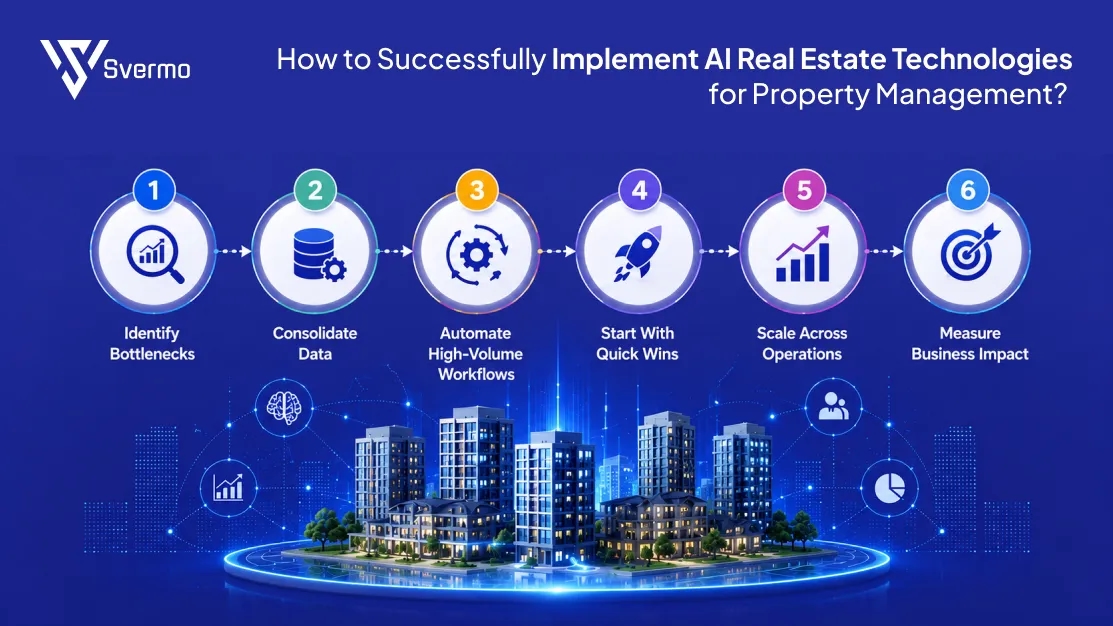
Many real estate businesses invest in new technology expecting immediate results. However, successful adoption depends on having a clear implementation strategy.
The most effective organizations focus on operational challenges first and then align the right AI real estate technologies for property management to solve them.
1. Identify Bottlenecks
Start by identifying the operational processes that consume the most time, create delays, or require excessive manual effort. This helps prioritize the best AI technologies for real estate property operations that can deliver value quickly.
- Review repetitive operational tasks across leasing, tenant management, and reporting.
- Identify processes that create delays or manual handoffs.
- Measure areas with the highest administrative workload.
- Prioritize workflows that directly impact revenue or tenant experience.
2. Consolidate Data
Disconnected systems often limit the effectiveness of AI real estate automation platforms. Creating a reliable data foundation improves visibility, automation accuracy, and decision-making across the entire property operations lifecycle.
- Centralize property, tenant, leasing, and financial data.
- Eliminate duplicate records across systems.
- Improve data quality before automation begins.
- Create a single source of operational truth.
3. Automate High-Volume Workflows
Focus first on processes that occur daily and require significant administrative effort. These areas often generate the fastest returns from real estate workflow automation and operational efficiency improvements.
- Implement real estate workflow automation for repetitive tasks.
- Automate leasing inquiries, follow-ups, and tenant communication.
- Reduce manual CRM updates and reporting activities.
- Standardize workflows across multiple properties.
4. Start With Quick Wins
Early implementation success helps increase stakeholder confidence and encourages wider adoption. Small, measurable improvements often create momentum for larger automation initiatives across property operations.
- Launch one or two high-impact use cases first.
- Track measurable operational improvements.
- Gather feedback from property and leasing teams.
- Expand implementation based on proven results.
5. Scale Across Operations
Once initial workflows are optimized, expand automation to additional departments and properties. This approach helps organizations maximize the value of their AI property operations platform investment.
- Connect leasing, tenant management, and financial operations.
- Introduce property operations intelligence across portfolios.
- Expand automation across multiple locations and business units.
- Support long-term growth without increasing operational complexity.
6. Measure Business Impact
Successful implementation should be evaluated through business outcomes rather than software adoption alone. Consistent measurement helps demonstrate the value of industry-leading AI property management technologies.
- Monitor leasing response times and conversion rates.
- Measure reductions in manual administrative work.
- Track tenant satisfaction and operational efficiency metrics.
- Evaluate portfolio-level performance improvements.
Even with a well-planned implementation strategy, real estate businesses can face challenges that affect adoption, integration, and long-term success. Understanding these obstacles before deployment can help avoid costly mistakes and accelerate results.
Ready to Turn AI Plans Into Operational Results?
A successful deployment starts with the right workflows, data foundation, and automation strategy.
What's Preventing Real Estate Businesses from Getting Full Value from AI Technologies?
The benefits of adopting top real estate AI technologies for property operations are clear. However, successful implementation depends on more than selecting the right platform.
Many organizations invest in promising solutions but struggle to achieve expected outcomes because of operational, data, or adoption challenges.
The good news is that most of these obstacles can be addressed with the right planning, processes, and technology strategy.
The table below highlights some of the most common challenges organizations face when implementing AI real estate technologies for property management and practical ways to overcome them.
| Challenge | Why It Creates Problems | Solution |
|---|---|---|
Disconnected Data Across Systems | Leasing, tenant, CRM, and financial information often exist in separate systems, limiting the effectiveness of AI real estate automation platforms. | Consolidate operational data into a centralized platform that provides a unified view of property operations. |
Poor Data Quality | Inaccurate, outdated, or duplicate records reduce the accuracy of automation and reporting. | Establish data governance processes and clean operational data before deployment. |
Employee Resistance to Change | Teams may view automation as disruptive or difficult to learn, slowing adoption. | Involve users early, provide training, and focus on how AI reduces repetitive work rather than replacing employees. |
Multiple Point Solutions | Organizations often adopt separate tools for leasing, CRM, tenant communication, and reporting, creating fragmented workflows. | Prioritize leading real estate AI platforms for operational automation that support multiple operational functions within one environment. |
Unclear Success Metrics | Without defined goals, it becomes difficult to measure the impact of new technology investments. | Establish measurable KPIs such as leasing response times, occupancy rates, tenant satisfaction, and operational efficiency improvements. |
Integration Challenges | New systems may not connect effectively with existing property management software and operational tools. | Select platforms with strong integration capabilities and flexible data connectivity options. |
Scaling Across Multiple Properties | Processes that work for a single property may become difficult to manage across larger portfolios. | Choose enterprise property operations software designed to support multi-property and multi-location operations. |
Limited Operational Visibility | Leadership teams often struggle to identify performance issues when information is spread across departments. | Implement property operations intelligence capabilities that provide centralized reporting and portfolio-level visibility. |
Automating the Wrong Processes | Some organizations automate low-impact tasks while larger operational bottlenecks remain unchanged. | Focus first on high-volume workflows such as leasing, tenant communication, screening, and rent collection. |
Compliance and Governance Risks | Property operations involve sensitive tenant and financial information that must be managed carefully. | Establish clear governance policies and evaluate platform security, privacy, and compliance controls during vendor selection. |
Many of these challenges are often caused by because of the disconnected workflows, fragmented systems, and outdated operational processes.
This is one reason why innovative AI real estate platforms for end-to-end property operations are gaining attention across the industry. Rather than solving individual tasks in isolation, they help organizations create a more connected and scalable operating model. So which company is the correct choice to bring these AI products to you?
How Svermo Helps Modernize Real Estate Property Operations with AI?
Real estate operations involve far more than managing properties. Teams must coordinate leasing, tenant communication, payments, CRM activities, and portfolio oversight while maintaining a consistent experience across every property.
As one of the emerging AI real estate technologies for property management, Svermo brings these functions together through a connected platform built for modern property operations. It combines leasing automation, tenant screening, CRM management, automated rent collection, and real estate workflow automation to help teams operate more effectively across the property lifecycle.
Svermo also provides property operations intelligence, giving decision-makers a clearer view of leasing activity, occupancy trends, and portfolio performance. By connecting operational data and workflows in one environment, organizations can improve coordination, strengthen decision-making, and support long-term growth.
As demand for advanced property operations technology powered by AI continues to increase, platforms that unify critical operational functions are becoming an important part of the future of real estate management.
Why Manage More Complexity Than You Need To?
Bring leasing, tenant management, CRM, and operational intelligence together in one AI-powered environment.
Final Thoughts
The adoption of top real estate AI technologies for property operations is no longer limited to early adopters. From leasing automation and tenant screening to workflow automation, operational intelligence, and asset management, AI is becoming a core part of modern property operations.
The organizations seeing the greatest results are not simply adding new tools. They are using AI real estate technologies for property management to create more connected, scalable, and efficient operating models.
Svermo is helping real estate businesses move in that direction by bringing together leasing, tenant management, CRM, rent collection, operational intelligence, and workflow automation within a unified AI-powered platform designed for modern property operations.
As the industry continues to evolve, investing in the right technologies today can help create stronger tenant experiences, better operational outcomes, and a more resilient foundation for future growth.
For organizations looking to modernize property operations with AI, contact us
 https://www.linkedin.com/in/saanvi-verma-38711a36a
FAQs
Leasing automation, AI tenant screening platforms, automated rent collection technology, and AI-powered real estate CRM systems often generate value quickly because they automate high-volume operational tasks.
Yes. Most leading real estate AI platforms for operational automation are designed to integrate with existing property management, CRM, accounting, and communication systems.
Traditional systems primarily store and manage information. An AI property operations platform adds automation, operational intelligence, workflow management, and decision-support capabilities across the property lifecycle.
Property management companies, brokerages, multifamily operators, portfolio managers, and enterprise real estate teams can benefit from advanced property operations technology powered by AI.
AI helps provide faster responses, automated support, personalized communication, and more efficient service delivery through innovative real estate AI systems for leasing and tenant management.
Yes. Many trusted AI platforms for property operations and management support residential, commercial, mixed-use, and multi-property portfolios from a centralized environment.
Focus on workflow automation, integration capabilities, scalability, operational intelligence, reporting visibility, and alignment with business goals rather than individual features.
Have Questions About Modernizing Property Operations?
Not sure which AI solution is the right fit for your property operations?