

AI HOA Accounting Software for Modern Property Operations: Complete 2026 Guide

Get a summary of this article with your favorite AI





AI Summary
- •AI HOA accounting software for property management automates accounting, reporting, budgeting, and dues management.
- •AI-powered HOA accounting software for community associations improves efficiency, accuracy, and financial visibility.
- •Choosing the right solution requires evaluating AI maturity, integrations, security, and scalability.
- •Future AI will enable autonomous finance agents, predictive intelligence, and connected property operations.
- •Svermo, an AI product-led company for U.S. real estate, enables organizations to adopt connected AI-powered property operations.
How much time, money, and effort does your team spend every month closing HOA books instead of improving community operations?
For many U.S. property management companies, manual reconciliation, disconnected accounting tools, and spreadsheet-based reporting still slow down financial operations. Here comes the AI HOA accounting software for property management to save you.
Traditional HOA accounting systems were designed to record transactions, not streamline financial workflows. As portfolios grow, finance teams spend more time reconciling accounts, processing vendor invoices, and preparing board reports than improving operational efficiency.
Unlike rule-based automation, AI can categorize transactions, identify anomalies, support reconciliation, and deliver real-time financial insights as new data enters the system.
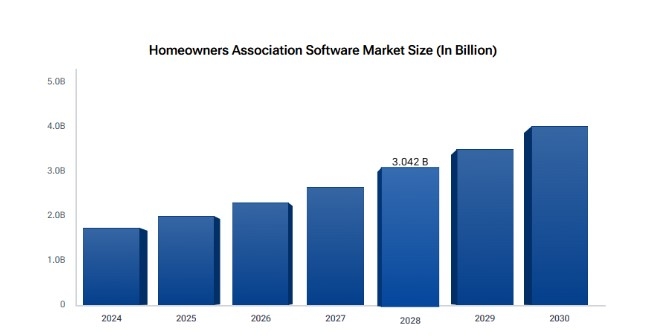
The latest numbers are reflecting this change across the market. The HOA software industry, valued at $2 billion, is projected to grow at a 15% CAGR and reach $6 billion, highlighting rising investment in intelligent financial operations platforms.
Apart from this around 74% of residential property managers have adopted automated payment processing, 61% report higher operational efficiency through centralized platforms, and 48% have reduced workflow delays using integrated digital systems.
If you manage one or multiple HOA communities, these challenges may sound familiar:
- Why does month-end closing still take days instead of hours?
- Why is dues tracking still dependent on spreadsheets?
- Why does vendor invoice reconciliation consume so much time?
- Why is financial visibility fragmented across communities?
Here, Svermo comes at the forefront with its products like AI property management software. We help property management companies modernize financial operations with AI-powered products that unify accounting, reporting, and workflow automation, enabling teams to reduce manual work and gain real-time financial visibility across every HOA community.
The real advantage isn't simply automating accounting tasks. It is transforming how financial operations are managed across every HOA community. So, what is AI HOA accounting software, and how does it differ from a traditional HOA accounting solution?
Still Spending More Time on Accounting Than Managing Communities?
Modern HOA finance shouldn't slow down your operations. Discover how AI can simplify the work behind the numbers.
What Is AI HOA Accounting Software for Property Management and Why Are Traditional Systems Falling Behind?
AI HOA accounting software for property management is an intelligent financial operations platform that combines accounting, reporting, budgeting, payment management, and workflow automation into one centralized system. Unlike traditional HOA accounting software, it uses AI to automate repetitive financial processes, improve reporting accuracy, and provide real-time visibility across one or multiple communities.
Traditional HOA accounting systems were built to record financial transactions, but today's property management companies need software that can actively support growing operations.
Some of the biggest limitations of conventional HOA accounting systems include:
- Manual financial workflows that require teams to spend hours reconciling accounts, processing invoices, and preparing month-end reports.
- Spreadsheet-dependent processes for tracking dues, budgets, and financial performance across multiple HOA communities.
- Disconnected systems where accounting, payments, banking, and reporting operate separately, leading to duplicate work and inconsistent financial data.
- Delayed financial visibility, making it difficult for property managers and HOA boards to monitor cash flow, expenses, or outstanding dues in real time.
- Limited scalability as managing additional communities increases manual effort instead of improving operational efficiency.
Modern AI-powered HOA accounting software for community associations addresses these challenges by automating routine accounting tasks while connecting every financial workflow into a single platform. Instead of spending valuable time on manual bookkeeping, finance teams can focus on budgeting, financial planning, compliance, and delivering better outcomes for the communities they manage.
After knowing what AI HOA accounting software helps establish the foundation you must deep down into the differences between both of the platforms.
Traditional HOA Accounting Software vs. AI HOA Accounting Software for Property Management: Which Is Better for Modern Property Operations?
Choosing between traditional accounting software and AI HOA accounting software for property management determines how efficiently property management companies can manage financial operations, support growing HOA portfolios, and respond to changing business demands.
The comparison below highlights the operational differences between conventional accounting tools and modern AI-powered platforms.
| Business Area | Traditional HOA Accounting Software | AI HOA Accounting Software |
|---|---|---|
Primary Purpose | Focuses on bookkeeping, financial records, and periodic reporting. | Functions as an AI-powered HOA accounting software for community associations that automates financial operations and supports data-driven decision-making. |
Financial Workflows | Accounting activities are completed through manual processes and disconnected systems. | Automated HOA financial management software for property managers connects accounting, approvals, payments, and reporting into one streamlined workflow. |
Payment & Dues Management | Payment tracking often requires manual validation and follow-ups. | AI software for HOA dues tracking and financial reporting automatically matches payments, identifies overdue balances, and improves collection accuracy. |
Invoice & Expense Processing | Vendor invoices are manually reviewed, coded, and approved. | An HOA invoice processing AI agent extracts invoice data, categorizes expenses, and routes approvals with minimal manual effort. |
Reporting & Visibility | Reports are created after financial periods close, limiting timely decision-making. | Real-time HOA financial reporting software with AI capabilities provides continuously updated dashboards and board-ready financial reports. |
Portfolio Oversight | Financial data is often managed separately for each community. | A smart HOA accounting platform for residential property operations centralizes financial performance across multiple HOA communities. |
Business Intelligence | Teams primarily work with historical financial data. | AI-driven HOA financial reporting and budgeting software identifies spending patterns, forecasts budgets, and highlights financial risks before they become larger issues. |
Scalability | Administrative effort increases as more communities are added. | A cloud-based HOA accounting software for modern property management scales financial operations without significantly increasing manual workload. |
The difference extends beyond accounting automation. Modern HOA management companies are increasingly connecting AI-powered financial operations with solutions such as AI document management software for centralized financial records and automated rent collection software to build a more connected property operations ecosystem.
As AI adoption continues to grow, accounting is becoming one component of a broader digital operating model where financial data, documents, payments, and operational workflows work together instead of existing in separate systems. But still property onwners wonder,” how this HOA accounting software work?”. So here is the answer.
Behind the Scenes: How AI HOA Accounting Software Powers Modern Property Management?
AI HOA accounting software for property management continuously captures financial data, analyzes it, automates repetitive processes, and delivers actionable insights throughout the accounting lifecycle.
1. Collect Financial Data from Every Source
The process begins by securely collecting financial information from multiple sources, including homeowner payments, bank transactions, vendor invoices, accounting records, and budgeting systems. Instead of operating in silos, the platform creates a centralized financial data layer for every HOA community.
This foundation enables the platform to:
- Consolidate data from multiple communities into one workspace.
- Eliminate duplicate financial records across disconnected systems.
- Standardize financial information before processing.
- Maintain a consistent audit trail for every transaction.
2. AI Understands and Classifies Financial Transactions
Once financial data enters the platform, AI automatically recognizes transaction types, categorizes expenses, maps payments to homeowner accounts, and validates accounting records. This significantly reduces the manual effort required for day-to-day bookkeeping.
As part of a broader AI-powered property accounting platform, the system can:
- Categorize operating and reserve expenses automatically.
- Match homeowner dues with the correct accounts.
- Identify incomplete or inconsistent financial records.
- Reduce manual coding across recurring accounting activities.
3. Automate Core Financial Workflows
After classifying the data, AI executes predefined financial workflows such as invoice approvals, payment reconciliation, recurring billing, report generation, and approval routing. This transforms static bookkeeping into property management accounting automation that runs continuously in the background.
Typical workflow automation includes:
- Processing invoices through an intelligent AI agent.
- Routing approvals to the appropriate finance or HOA stakeholders.
- Triggering recurring billing and payment reminders automatically.
- Keeping accounting records synchronized across connected systems.
4. Generate Real-Time Financial Reporting and Insights
Instead of waiting until month-end, the platform continuously updates financial dashboards and reports as transactions are processed. This allows finance teams and HOA boards to monitor financial performance without relying on manual report preparation.
With real-time HOA financial reporting software with AI capabilities, organizations can:
- Track cash flow across multiple HOA communities.
- Monitor budgets against actual spending.
- Detect unusual financial activity before reports are finalized.
- Access board-ready financial statements whenever needed.
5. Connect Financial Operations with the Broader Property Management Ecosystem
The AI HOA accounting platforms deliver greater value when they integrate with other AI-powered property management solutions. Financial operations become part of a connected ecosystem rather than an isolated accounting function.
For example, organizations centralize invoices, contracts, and financial records, while combining accounting workflows with AI-powered CRM software to keep homeowner interactions and financial activities connected.
A unified ecosystem helps organizations:
- Reduce duplicate data entry across operational systems.
- Improve collaboration between finance, operations, and community managers.
- Maintain a single source of truth for financial and operational data.
- Scale property operations without increasing administrative complexity.
Together, these connected workflows transform AI financial operations software for HOA and condo associations from a bookkeeping tool into an intelligent operational platform that continuously supports accounting, reporting, and financial decision-making.
Once you understand the workflow behind AI-powered accounting, the next step is seeing how it performs in real business situations. From managing growing HOA portfolios to improving financial governance, these examples show where AI delivers measurable operational value.
What Are the Most Practical Real-World Use Cases of AI HOA Accounting Software for Property Management?
One of the most common questions buyers ask is, "where does AI HOA accounting software improve day-to-day operations beyond automating accounting?" The answer lies in how organizations apply AI to solve real operational challenges, not just financial tasks.
Below are some of the most impactful business scenarios where AI HOA accounting software for property management delivers measurable value.
1. Onboarding New HOA Communities
Acquiring new HOA communities often means inheriting different accounting structures, approval processes, vendor records, and reporting formats. Standardizing these financial operations manually can take weeks and significantly increase the workload for accounting teams.
A cloud-based HOA accounting software for modern property management creates a consistent financial framework that accelerates portfolio onboarding.
Example
A property management company acquires 35 HOA communities from another operator. Instead of migrating financial records community by community, the company uses AI HOA accounting software for property management to standardize charts of accounts, automate financial workflows, and establish consistent reporting practices across every newly onboarded HOA.
2. Preparing Board Meetings with Live Data
HOA board meetings require timely financial information to approve budgets, review expenses, and evaluate reserve fund performance. Waiting until month-end to prepare reports often delays important decisions. HOA accounting and reporting software with AI automation keeps financial dashboards continuously updated so board members always work with current information.
Example
A management company responsible for more than 80 HOA communities uses real-time HOA financial reporting software with AI capabilities to generate live board packets before every meeting. Finance teams spend their time validating financial insights instead of manually compiling reports from multiple systems.
3. Detecting Financial Exceptions Early
Many accounting issues are discovered only during reconciliation or financial audits, making them more expensive and time-consuming to resolve. An intelligent HOA accounting system for community management continuously reviews financial activity to identify duplicate invoices, unusual spending patterns, or unexpected payment anomalies before they affect financial reporting.
Example
While reviewing daily transactions, an AI-powered HOA accounting software for community associations identifies duplicate landscaping invoices submitted under separate purchase orders. The finance team investigates the exception before payment is released, preventing unnecessary expenses and reducing downstream reconciliation work.
4. Planning Reserve Funds with AI Insights
Reserve planning is one of the most important financial responsibilities for HOA boards. Instead of relying solely on historical spreadsheets, AI-driven HOA financial reporting and budgeting software analyzes historical spending, vendor trends, and recurring maintenance costs to support more informed financial planning.
Example
Before finalizing the annual reserve budget, a finance team uses automated HOA financial management software for property managers to compare multiple funding scenarios based on historical repair costs, inflation trends, and projected capital expenditures across every managed community.
5. Handling Resident Financial Requests Faster
Finance teams regularly answer questions about account balances, payment history, invoices, assessment charges, and outstanding dues. These requests consume valuable time that could be spent on strategic financial work. Integrating accounting with an AI voice assistant for property management allows residents to access common financial information instantly.
Example
A homeowner wants to confirm whether their quarterly HOA assessment has been received before the due date. Instead of contacting the property office, they receive real-time payment information through an AI-powered self-service assistant connected to the accounting platform.
6. Linking Accounting with Maintenance Planning
Financial decisions often depend on operational events such as inspections, repairs, and capital improvement projects. Integrating accounting with AI property inspections software helps finance and operations teams work from the same data instead of maintaining separate records.
Example
After a property inspection identifies multiple roof repairs across several communities, estimated repair costs automatically feed into the HOA property management accounting platform with workflow automation, allowing finance teams to update maintenance budgets, approve vendors, and track project expenses from a single workflow.
These scenarios demonstrate why leading HOA management companies increasingly evaluate AI financial operations software for HOA and condo associations based on operational outcomes rather than accounting features alone. The greatest value comes from improving how financial decisions are made across the entire property management lifecycle, not simply automating bookkeeping.
Now the next step is to know, what are the core capabilities that make AI HOA accounting software effective for property management?
Ready to Turn These Use Cases Into Everyday Workflows?
The right AI products help you move from manual processes to connected property operations without adding complexity.
What Capabilities Should You Expect from AI HOA Accounting Software for Property Management?
The best AI HOA accounting software for property management does more than digitize bookkeeping. It automates financial workflows, improves reporting accuracy, and gives property management companies a centralized view of operations across every HOA community.
The table below highlights the capabilities that define a modern AI-powered HOA accounting software for community associations.
| Capability | How It Works | Why It Matters |
|---|---|---|
AI-Powered HOA Dues Tracking & Payment Management | Modern AI software for HOA dues tracking and financial reporting automatically records homeowner payments, identifies overdue accounts, applies payments to the correct ledgers, and keeps balances updated in real time. | Eliminates manual payment matching, improves cash flow visibility, and reduces errors that often occur when managing multiple communities. |
HOA Invoice Processing AI Agent | An intelligent HOA invoice processing AI agent extracts invoice data, categorizes expenses, validates vendor details, routes approvals, and updates accounting records automatically. As part of HOA accounting software with automated invoice and expense management, it minimizes repetitive accounts payable work. | Reduces invoice processing time, prevents duplicate payments, improves approval efficiency, and helps finance teams maintain accurate financial records without manual intervention. |
AI-Driven Financial Reporting & Board Statements | HOA accounting and reporting software with AI automation generates balance sheets, income statements, cash flow reports, reserve reports, and board-ready financial summaries using live accounting data. | Enables faster month-end reporting, improves financial transparency, and allows HOA boards to make decisions based on current financial information instead of outdated reports. |
AI-Assisted Bank Reconciliation | Automatically matches bank transactions with invoices, payments, and ledger entries while identifying unmatched transactions or potential discrepancies for review. | Reduces reconciliation time, minimizes accounting errors, and accelerates month-end close across one or multiple HOA communities. |
Smart Budgeting & Financial Forecasting | AI-driven HOA financial reporting and budgeting software analyzes historical spending, reserve balances, vendor costs, and seasonal trends to support more accurate budgeting and financial planning. | Helps community associations control operating expenses, improve reserve planning, and prepare realistic annual budgets. |
Vendor & Expense Management Automation | Tracks vendor contracts, automates approval workflows, categorizes expenses, and maintains a centralized record of every vendor transaction. | Improves financial control, reduces processing delays, and creates a consistent approval process across communities. |
Multi-Community Financial Management | A smart HOA accounting platform for residential property operations consolidates accounting data, payments, expenses, and reports across multiple HOA communities into a single dashboard. | Gives property management companies portfolio-wide visibility without switching between multiple accounting systems, improving operational oversight and scalability. |
Workflow Automation for Financial Operations | A modern HOA property management accounting platform with workflow automation automates recurring billing, payment reminders, approval routing, recurring journal entries, and report distribution. | Reduces administrative workload, standardizes accounting processes, and allows finance teams to focus on higher-value financial planning instead of repetitive tasks. |
Cloud-Based Financial Operations | Cloud-based HOA accounting software for modern property management keeps financial records, documents, reports, and approvals securely accessible from any location with role-based access controls. | Supports distributed accounting teams, simplifies collaboration between property managers and HOA boards, and ensures financial data remains accessible in real time. |
AI-Powered Financial Intelligence & Exception Detection | An intelligent HOA accounting system for community management continuously analyzes financial activity to identify unusual spending patterns, payment anomalies, duplicate invoices, or reporting inconsistencies before they become larger issues. | Enables proactive financial management, reduces financial risk, and helps leadership make faster, data-driven decisions across every HOA community. |
The right capabilities should do more than automate accounting tasks. They should create a connected financial operations environment that helps property management companies improve efficiency, strengthen financial governance, and scale confidently as their HOA portfolios continue to grow.
As important as these capabilities are, does successful adoption ultimately depend on how the platform is implemented and integrated into existing financial systems?
How Do You Successfully Implement AI HOA Accounting Software for Property Management?
Selecting the right platform is only the first step. The success of AI HOA accounting software for property management depends on how well it integrates with existing financial processes, property management systems, and operational workflows. A phased implementation approach minimizes disruption while helping teams realize value faster.
1. Assess Existing Financial Workflows
Before deploying a new platform, evaluate how accounting operations currently function across your HOA portfolio. Identify where manual work, disconnected systems, or reporting delays create operational bottlenecks.
During this assessment, organizations should:
- Map existing accounting and approval workflows.
- Identify repetitive manual tasks suitable for automation.
- Review reporting requirements for HOA boards and finance teams.
- Define measurable implementation goals.
2. Consolidate Financial and Operational Data
Implementation becomes significantly easier when financial information is standardized before migration. This includes accounting records, homeowner data, vendor information, invoices, budgets, and historical financial reports.
A structured migration helps organizations:
- Eliminate duplicate or outdated records.
- Improve financial data consistency.
- Reduce migration-related errors.
- Establish a reliable data foundation for AI.
3. Integrate with Existing Business Systems
A modern HOA property management accounting platform with workflow automation should integrate with the systems your teams already use instead of creating another operational silo.
Common integrations include:
- Banking and payment gateways.
- Property management platforms.
- ERP and accounting applications.
- Resident communication systems.
Organizations that also use an AI lead management system for real estate can further connect homeowner onboarding, communication, and financial workflows into a unified operational ecosystem.
4. Automate High-Impact Financial Processes First
Rather than automating every workflow at once, begin with processes that deliver immediate operational improvements. Early success builds confidence among finance teams and reduces implementation risk.
Most organizations prioritize:
- Dues collection and payment reconciliation.
- Vendor invoice approvals.
- Month-end financial reporting.
- Budget monitoring and variance tracking.
5. Train Teams Around Workflows, Not Just Software
Successful adoption depends on how comfortably finance teams, community managers, and HOA administrators incorporate AI into their daily work. Training should focus on redesigned workflows instead of individual software features.
Effective onboarding includes:
- Role-based training for different departments.
- Standard operating procedures for AI-assisted workflows.
- Governance policies for approvals and financial controls.
- Ongoing performance reviews after deployment.
6. Measure Performance and Optimize Continuously
Implementation does not end after deployment. Organizations should regularly evaluate how the platform impacts operational efficiency, financial accuracy, and reporting performance.
Key metrics to monitor include:
- Month-end closing time.
- Invoice processing turnaround.
- Reporting accuracy.
- Manual effort eliminated through automation.
- User adoption across finance and operations teams.
A successful implementation is not measured by how quickly new software goes live. It is measured by how effectively it improves financial operations, supports business growth, and enables teams to manage expanding HOA portfolios with greater efficiency.
Even with a structured rollout, implementation is rarely without obstacles. So, what are the most common obstacles organizations face when adopting AI HOA accounting software, and how can they overcome them before those challenges impact long-term success?
What Challenges Can You Face When Implementing AI HOA Accounting Software for Property Management, and How Can You Overcome Them?
Implementing AI HOA accounting software for property management involves modernizing financial processes, integrating existing systems, and preparing teams for new ways of working. While most implementation challenges are manageable, addressing them early can significantly improve adoption and long-term ROI.
| Implementation Challenge | How It Impacts | Recommended Approach |
|---|---|---|
Fragmented Financial Data | Financial records are often spread across spreadsheets, legacy accounting software, banking portals, and multiple HOA communities, making migration complex. | Standardize and clean financial data before implementation to create a reliable foundation for the new HOA financial operations platform. |
Legacy System Integration | Older accounting applications may not exchange data efficiently with modern AI platforms, resulting in disconnected workflows. | Choose a HOA property management accounting platform with workflow automation that offers API-based integrations and supports existing business systems. |
Resistance to Process Changes | Finance teams may hesitate to adopt AI if they believe it will disrupt familiar accounting practices or replace manual oversight. | Position AI as a productivity tool that automates repetitive work while keeping financial decisions under human control. Provide role-based onboarding throughout implementation. |
Inconsistent Financial Processes Across Communities | Different HOA communities often follow different approval workflows, reporting structures, and accounting practices, making standardization difficult. | Define standardized accounting policies and approval workflows before deploying AI-powered HOA accounting software for community associations across the portfolio. |
Poor Data Quality | Duplicate homeowner records, incomplete vendor information, and inaccurate historical transactions reduce reporting accuracy after migration. | Perform data validation and remove outdated or duplicate records before importing information into the new platform. |
Unclear Success Metrics | Organizations often implement new software without defining what operational success actually looks like. | Establish KPIs such as reporting turnaround time, reconciliation accuracy, invoice processing time, and manual effort reduction before deployment begins. |
Security and Financial Governance Concerns | AI platforms process sensitive homeowner, banking, and financial information, making governance a critical consideration. | Implement role-based access controls, audit trails, approval hierarchies, and security policies. Organizations with broader operational requirements often complement accounting controls with AI smart building management system solutions to strengthen visibility across connected property operations. |
Scaling Beyond the Initial Deployment | Implementations often perform well for a handful of communities but become difficult to manage as portfolios expand. | Deploy the platform in phases, validate workflows, and gradually onboard additional HOA communities while continuously refining operational processes. |
Overcoming these challenges is less about choosing the most feature-rich platform and more about creating a structured implementation strategy that aligns technology, people, and financial processes.
Once implementation challenges are addressed, the next strategic decision becomes even more important. So, how do you evaluate different vendors and choose the best AI HOA accounting software for your property management business?
How Should You Evaluate AI HOA Accounting Software for Property Management Before Making an Investment?
Evaluate AI HOA accounting software for property management based on scalability, integrations, security, and measurable outcomes, not just features or pricing. Focus on how well the platform fits your existing systems and supports long-term operations.
1. Evaluate the Platform's AI Maturity
Many vendors position their products as AI-powered, but the level of intelligence varies significantly. Some platforms simply automate predefined workflows, while others continuously analyze financial activity, identify anomalies, and generate actionable recommendations. Understanding this distinction helps separate true AI platforms from traditional accounting software with automation features.
Questions to ask vendors
- Which financial workflows are genuinely AI-driven?
- Can the platform detect anomalies without predefined rules?
- How does AI improve financial decision-making?
- How are AI-generated recommendations validated before execution?
2. Assess Scalability Across Multiple HOA Communities
The platform should support your future growth, not just your current portfolio. A modern next-generation HOA accounting software for property operations should maintain performance, governance, and reporting consistency as additional HOA communities are added.
Questions to ask vendors
- Can financial operations be managed centrally across multiple communities?
- How does the platform support portfolio expansion?
- Will additional communities require separate workflows?
- Does performance remain consistent as transaction volumes grow?
3. Review Integration Capabilities
A robust HOA property management accounting platform with workflow automation should integrate with banking systems, payment gateways, ERP platforms, resident portals, and other operational tools without creating new data silos.
Organizations that are modernizing broader property operations also evaluate integrations with an AI property visualization software to improve collaboration across sales, operations, and property management teams.
Questions to ask vendors
- Which business systems are supported through native integrations?
- Are APIs available for custom integrations?
- How is data synchronized between connected platforms?
- Can integrations be expanded as business requirements evolve?
4. Validate Security and Financial Governance
HOA accounting platforms process sensitive financial information, making governance just as important as functionality. Strong security controls help protect financial data while supporting compliance and accountability across every community.
Questions to ask vendors
- Are role-based permissions available?
- Does the platform maintain complete audit trails?
- How is financial data protected during storage and transmission?
- Which compliance standards and security certifications are supported?
5. Understand the Vendor's Product Roadmap
An AI platform should continuously improve as technology evolves. Reviewing a vendor's product strategy provides insight into whether the platform will continue supporting your operational needs over the coming years.
Questions to ask vendors
- How frequently are AI capabilities enhanced?
- What new automation features are planned?
- How does customer feedback influence product development?
- Is there a long-term roadmap focused on property operations innovation?
6. Measure Business Value Instead of Feature Count
The platform with the most features is not always the best investment. Instead, evaluate how effectively it reduces manual effort, improves financial visibility, and supports operational scalability.
Questions to ask vendors
- Which KPIs typically improve after implementation?
- How does the platform reduce manual accounting work?
- What measurable outcomes should organizations expect within the first year?
- How does the solution support long-term operational growth?
A successful evaluation focuses less on comparing feature checklists and more on understanding how each platform supports your financial operations, technology strategy, and future business objectives. The right solution should continue delivering value as your HOA portfolio grows and operational complexity increases.
As AI adoption continues to reshape property management, another important question emerges. What trends will define the future of AI HOA accounting software, and how should organizations prepare for the next generation of financial operations?
What Future Trends Will Shape AI HOA Accounting Software for Property Management?
The next evolution of AI HOA accounting software for property management will move beyond task automation to coordinated financial operations, where AI helps manage workflows, predict risks, and support decision-making across HOA portfolios.
1. Autonomous AI Finance Agents Will Coordinate Financial Operations
Future AI agents are expected to move beyond assisting accountants with individual tasks and begin coordinating complete financial workflows. Instead of manually managing every invoice, approval, reconciliation, and board report, finance teams will oversee AI-driven processes while intervening only when exceptions require human judgment.
This evolution could help organizations:
- Reduce repetitive financial administration.
- Accelerate month-end and year-end close.
- Improve operational consistency across multiple communities.
- Allow finance teams to focus on strategic planning instead of transaction management.
2. Multi-Agent AI Ecosystems Will Connect Every Property Operation
Rather than operating as independent applications, future property management platforms are expected to deploy specialized AI agents across finance, maintenance, leasing, inspections, resident communications, and compliance. These agents will collaborate in real time, allowing operational events to automatically trigger related financial workflows.
For example, approving a major maintenance project could simultaneously update reserve budgets, initiate vendor workflows, and notify relevant stakeholders without requiring manual coordination.
Future platforms could:
- Connect operational and financial decisions automatically.
- Reduce delays caused by disconnected systems.
- Improve collaboration across departments.
- Build a truly unified community association financial management system.
3. Predictive Community Financial Health Scores
Future AI-powered HOA financial management software for community associations is expected to generate dynamic financial health scores for every HOA by continuously analyzing reserve balances, cash flow, homeowner delinquencies, vendor costs, and operating expenses.
These predictive insights may help organizations:
- Identify financially vulnerable communities earlier.
- Prioritize preventive financial actions.
- Strengthen reserve fund planning.
- Improve long-term portfolio stability.
4. AI-Powered Financial Digital Twins
Future platforms may create digital financial models of individual HOA communities that allow executives to test business decisions before implementing them. Instead of relying on assumptions, organizations could simulate how inflation, capital projects, reserve allocations, or vendor changes may affect long-term financial performance.
Potential applications include:
- Comparing multiple budget scenarios before approval.
- Forecasting reserve funding requirements.
- Evaluating the financial impact of major capital improvements.
- Supporting more informed investment decisions.
5. AI-Powered Community Benchmarking
Today, most HOA boards evaluate financial performance using only their own historical reports. Future platforms are expected to anonymously benchmark communities against similar HOAs based on portfolio size, reserve health, delinquency rates, maintenance costs, and operating expenses.
This could enable organizations to:
- Compare financial performance against similar communities.
- Identify operational inefficiencies earlier.
- Support data-driven board discussions.
- Make budgeting decisions using broader market intelligence.
6. Autonomous Compliance Intelligence
As HOA regulations, accounting standards, and financial governance requirements continue to evolve, future AI platforms are expected to monitor regulatory changes continuously and assess how those changes affect individual communities. Instead of reacting to compliance issues after audits, organizations will receive proactive recommendations before risks emerge.
Potential benefits include:
- Earlier identification of compliance gaps.
- Automated policy recommendations.
- Reduced audit preparation effort.
- Stronger financial governance across every HOA portfolio.
The future of AI financial operations software for HOA and condo associations will be defined less by bookkeeping automation and more by intelligent financial orchestration.
As these capabilities mature, property management companies that invest in AI-ready financial operations today will be better positioned to scale portfolios, strengthen governance, and adapt to increasingly autonomous property management ecosystems.
Why Are Real Estate Organizations Across the USA Choosing Svermo for AI-Driven Property Operations?
Modern property management is shifting from fragmented tools to integrated AI-driven operations, where financial workflows, property processes, and decision intelligence work together.
As an AI product-led company focused on the U.S. real estate industry, Svermo offers AI products that help property management companies and real estate operators automate workflows and improve decision-making.
Organizations can also explore the best AI platform for real estate agents to understand how AI supports broader real estate operations.
Rather than treating accounting as a standalone function, Svermo connects it with leasing, inspections, resident communication, and asset management. This aligns with the growing use cases of conversational AI agents, helping organizations link financial workflows with communication and automation.
With this product-led approach, organizations can:
- Reduce operational silos.
- Scale portfolios more efficiently.
- Adopt AI across multiple functions.
- Build a foundation for future AI-driven operations.
Svermo’s approach enables real estate organizations to move toward connected, scalable, and intelligent property operations.
Looking Beyond Accounting to Smarter Property Operations?
See how Svermo's AI product-led approach helps real estate organizations build connected, future-ready operations.
In Summary!
The future of HOA accounting is no longer about replacing spreadsheets with better accounting software. It is about building connected financial operations that combine AI, automation, and real-time intelligence to help property management companies improve financial governance, streamline operations, and scale with confidence.
As AI HOA accounting software for property management continues to evolve, organizations that invest in intelligent financial operations today will be better positioned to manage growing HOA portfolios and adapt to the next generation of property management.
As an AI product-led company focused exclusively on the U.S. real estate industry, Svermo is delivering AI products that help real estate organizations connect finance with the broader property lifecycle. Beyond accounting, organizations can strengthen their AI ecosystem with AI tenant screening software for smarter resident qualification and real estate property valuation intelligence for more informed portfolio and investment decisions.
The organizations that gain the greatest competitive advantage won't be those that simply adopt AI. They'll be the ones that build an AI-ready operating model where finance, operations, and decision-making work together as one.
The future belongs to connected property operations. Start building yours today.
 https://www.linkedin.com/in/saanvi-verma-38711a36a
FAQs
Yes. Most modern AI HOA accounting software for property management is designed to integrate with accounting software, banking platforms, payment gateways, ERP systems, and property management applications through APIs or native integrations. This allows organizations to modernize financial operations without replacing their entire technology stack.
Yes. While enterprise property management companies often see the greatest operational benefits, self-managed HOAs can also use AI-powered HOA accounting software for community associations to automate dues collection, simplify bookkeeping, improve financial reporting, and reduce the administrative workload on volunteer board members.
Leading cloud-based HOA accounting software for modern property management platforms typically include encryption, role-based access controls, audit trails, multi-factor authentication, and regular data backups. When evaluating a solution, organizations should also review its compliance certifications, security policies, and disaster recovery capabilities before implementation.
Yes. AI can automatically identify duplicate invoices, unusual payment activity, inconsistent expense entries, and reconciliation discrepancies before financial reports are finalized. While human oversight remains essential, AI adds an additional layer of financial validation that helps improve reporting accuracy and reduce operational risk.
Implementation timelines vary depending on portfolio size, existing systems, data quality, and integration requirements. Organizations managing a few communities may complete deployment within a few weeks, while larger property management companies with complex financial workflows typically require a phased implementation approach over several months.
After adopting AI financial operations software for HOA and condo associations, organizations commonly measure reporting turnaround time, month-end closing duration, invoice processing time, dues collection rates, reconciliation accuracy, manual hours saved, and portfolio-wide financial visibility to evaluate business impact.
Traditional HOA management software focuses on managing day-to-day community operations such as resident communication, maintenance requests, document management, and payments. AI HOA accounting software for property management focuses on intelligent financial operations by automating accounting workflows, improving financial reporting, supporting budgeting, and generating actionable financial insights.