
Built Specifically for Property Management Firms
Property management involves constant coordination across tenants, maintenance, and operations, where delays and missed requests affect performance. Svermo, an AI property management software development company, helps streamline these processes with intelligent systems that improve response times and reduce manual effort.
Schedule a CallTrusted by Leading Real Estate Operators










-3.webp&w=1920&q=75)


-3.webp&w=1920&q=75)
Who This Is for in Property Management
Whether you manage homes, offices, mixed portfolios, or entire communities, the operational challenges may differ, but the need for speed, coordination, and consistency remains the same.

Residential Property Managers
Residential property managers handle frequent tenant requests, maintenance coordination, and day-to-day operations. Svermo helps simplify these interactions, enabling faster responses, better tracking, and a more consistent experience across all properties.

Commercial Property and Portfolio Managers
Commercial property and portfolio managers deal with lease coordination, tenant requirements, and operational timelines. Svermo supports these processes by improving visibility, coordination, and execution across complex property operations.

Mixed-Use Property and Portfolio Managers
Mixed-use property and portfolio managers operate across residential and commercial assets, requiring careful coordination between different needs. Svermo helps bring alignment across these layers, improving efficiency while maintaining control over diverse operations.

Community and Association Managers
Community and association managers manage ongoing communication, service requests, and shared spaces. Svermo helps streamline these responsibilities, enabling quicker responses, better organization, and a more reliable management experience.
Operational Challenges Faced by Property Management Teams
Property management is fast-moving, but missed inquiries, slow responses, and disconnected processes often get in the way, making operations harder to manage and scale.

Missed Calls and Inquiries
High-intent prospects often reach out outside working hours or during peak times, and missed calls or delayed follow-ups can lead to lost opportunities and reduced occupancy.

Slow Response to Tenants
Delayed replies to tenant requests or issues can impact satisfaction and trust, often leading to repeated follow-ups and increased operational pressure.

Manual Task Coordination
Managing tasks across calls, messages, and spreadsheets takes time and increases the chances of errors, making daily operations harder to track and execute efficiently.

Delays in Maintenance Handling
Service requests often get delayed due to lack of coordination and visibility, affecting tenant experience and increasing the risk of recurring issues.

Scattered Communication Channels
Conversations spread across calls, emails, and messaging platforms make it difficult to maintain context, track requests, and ensure nothing gets missed.
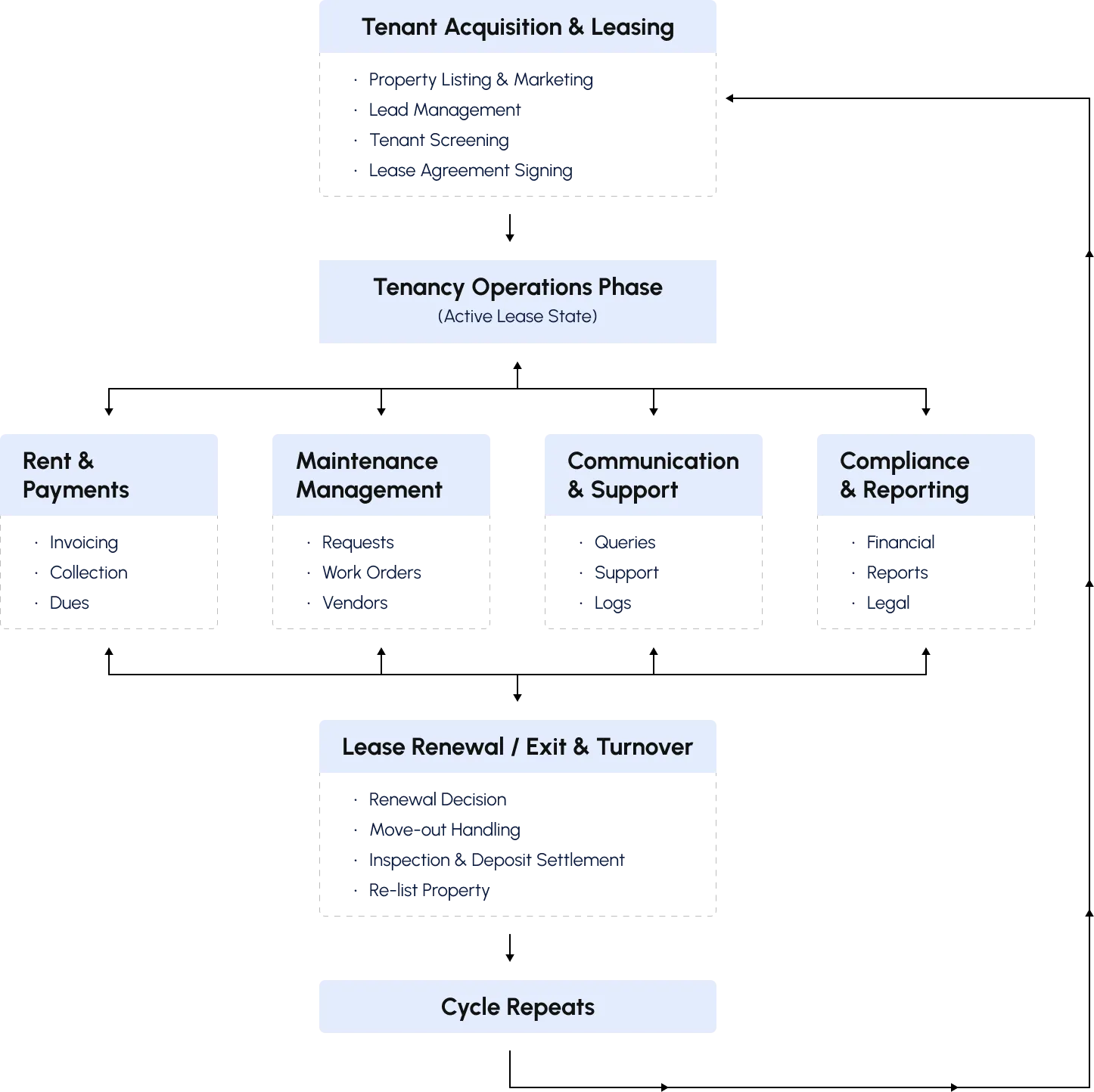
How Property Management Firms Actually Operate
Property management rarely follows a straight line. It runs on constant requests, quick decisions, and ongoing coordination, where even small delays can quickly turn into larger operational issues.


No Missed Inquiries
With Svermo, every call, message, and inquiry is captured and handled without delay. Our systems ensure no opportunity is missed, helping property management teams reduce missed inquiries by up to 60–70% and improve overall lead conversion.

Faster Tenant Responses
Svermo enables instant and consistent responses to tenant requests through intelligent automation. This reduces response time significantly while improving tenant satisfaction and reducing repeated follow-ups.

Less Manual Work
We reduce the need for manual coordination by automating routine tasks like follow-ups, scheduling, and request tracking. This allows your team to focus on critical operations instead of repetitive work.

Efficient Maintenance Handling
Svermo streamlines how maintenance requests are received, assigned, and tracked. By improving coordination and visibility, teams can resolve issues faster and reduce delays across properties.

Scalable Operations
Our systems are built to handle increasing tenants, properties, and requests without adding operational burden. With Svermo, you can scale efficiently while maintaining control and consistency across operations.
How Svermo Improves Operations and Drives Measurable Impact for Property Management Firms
Svermo transforms how property management teams operate by eliminating missed opportunities, reducing delays, and improving execution across daily operations, leading to measurable gains in efficiency, response time, and overall performance.
Why Property Management Firms Choose Svermo for Better Operations?
Svermo combines real estate expertise with intelligent systems to solve operational challenges at the root, helping property management teams run more efficiently, respond faster, and maintain consistency as they scale.

Ready to Improve How Your Property Management Operations Actually Run?
Property management teams handle 100+ requests every week, and delays add up fast. Svermo helps keep operations running smoothly.

Tell Us What You’re Looking to Build
Share your vision, and we’ll shape an AI system that fits how your real estate business actually operatess
FAQs
Property management firms commonly deal with high volumes of tenant requests, maintenance coordination, administrative workload, and communication gaps. Many of these challenges stem from disconnected workflows and lack of centralized systems, which slow down operations and increase inefficiencies. This is where a property management AI software development company can help streamline operations.
Improving response times requires reducing manual coordination and centralizing communication. With structured systems and automation, firms can handle tenant requests faster, track tasks more effectively, and ensure nothing gets missed during daily operations through AI property management software development solutions.
Yes, AI can automate repetitive tasks such as handling inquiries, scheduling maintenance, tracking requests, and managing communication. With the help of AI property management software development, businesses can reduce manual effort and maintain consistent operations at scale.
Svermo builds systems designed around how property management actually operates, focusing on real workflows instead of isolated features. As a property management AI software development company, Svermo helps teams reduce delays, improve coordination, and operate with greater consistency as they scale.
Yes, Svermo is designed to work alongside existing property management tools and workflows. Through AI property management software development, firms can enhance their current systems with intelligent capabilities without replacing their entire infrastructure.
Scaling becomes difficult when operations rely heavily on manual processes. By introducing structured systems through AI property management software development, firms can handle more properties, tenants, and requests without increasing team workload or operational complexity.